Echo
Erika Holm, Ngaroma Riley, Tarika Sabherwal
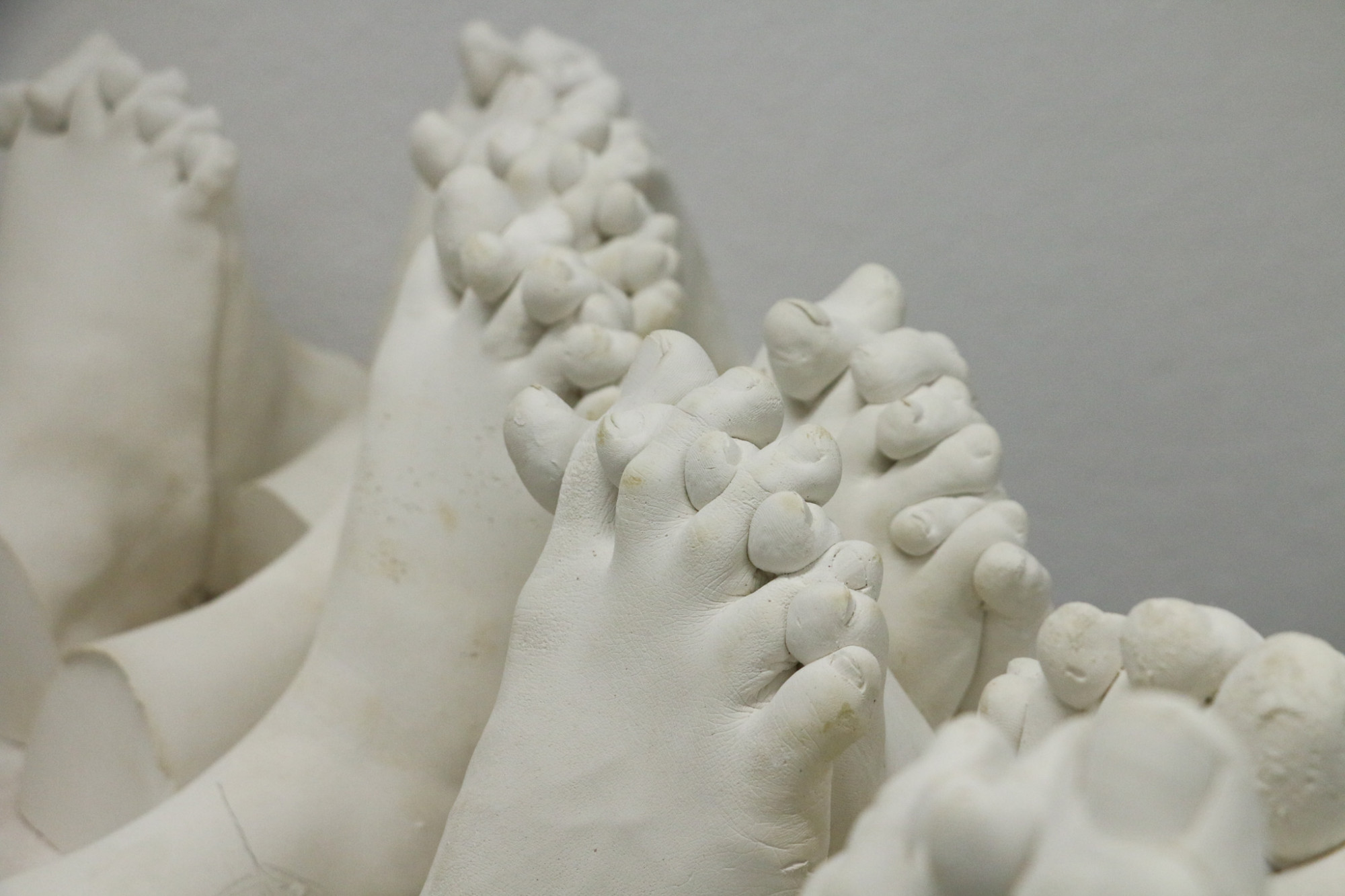
Erika Holm, Apology, 2025. Detail.
Echo, 2025. Installation view.
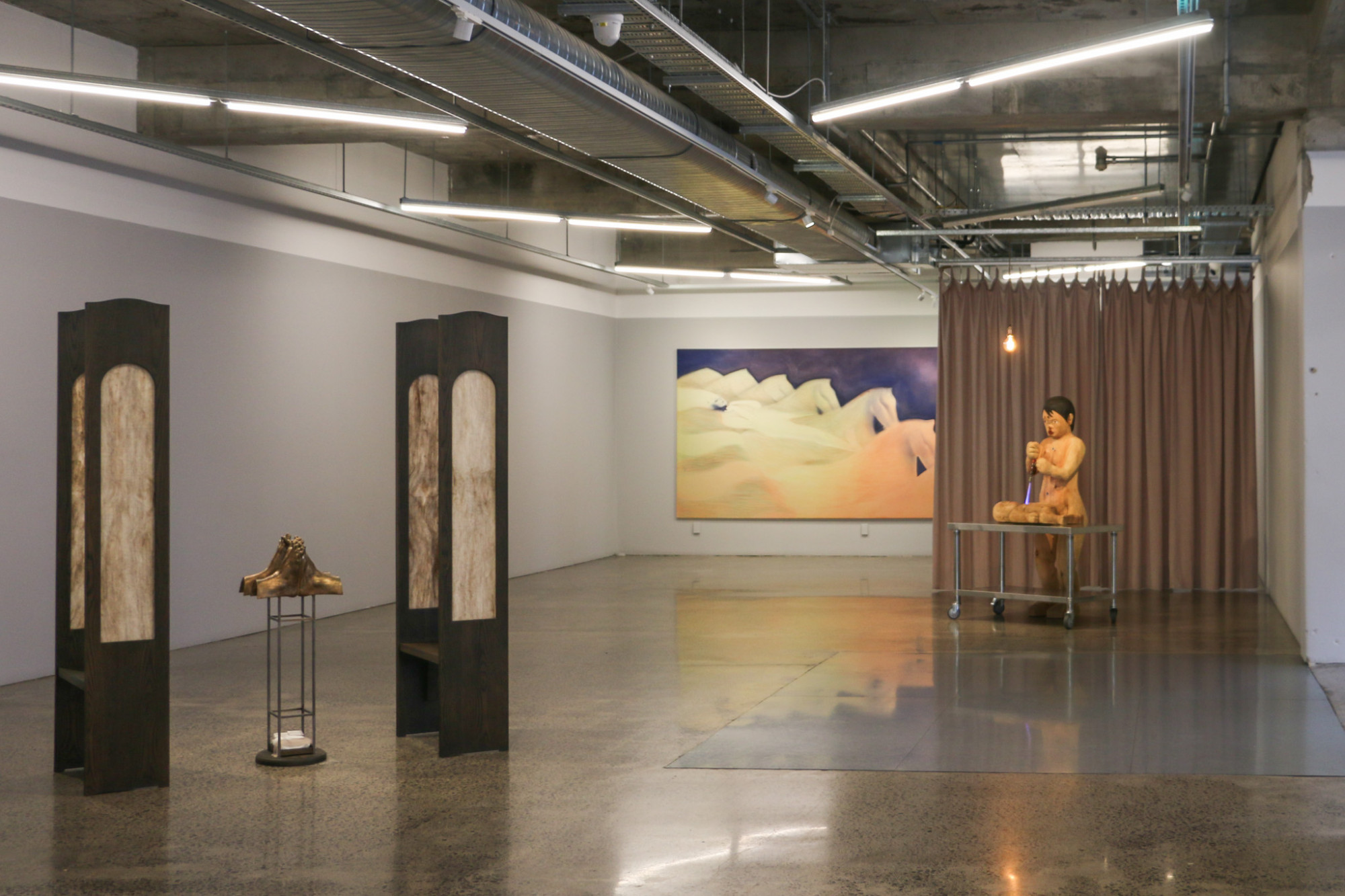
Echo, 2025. Installation view.
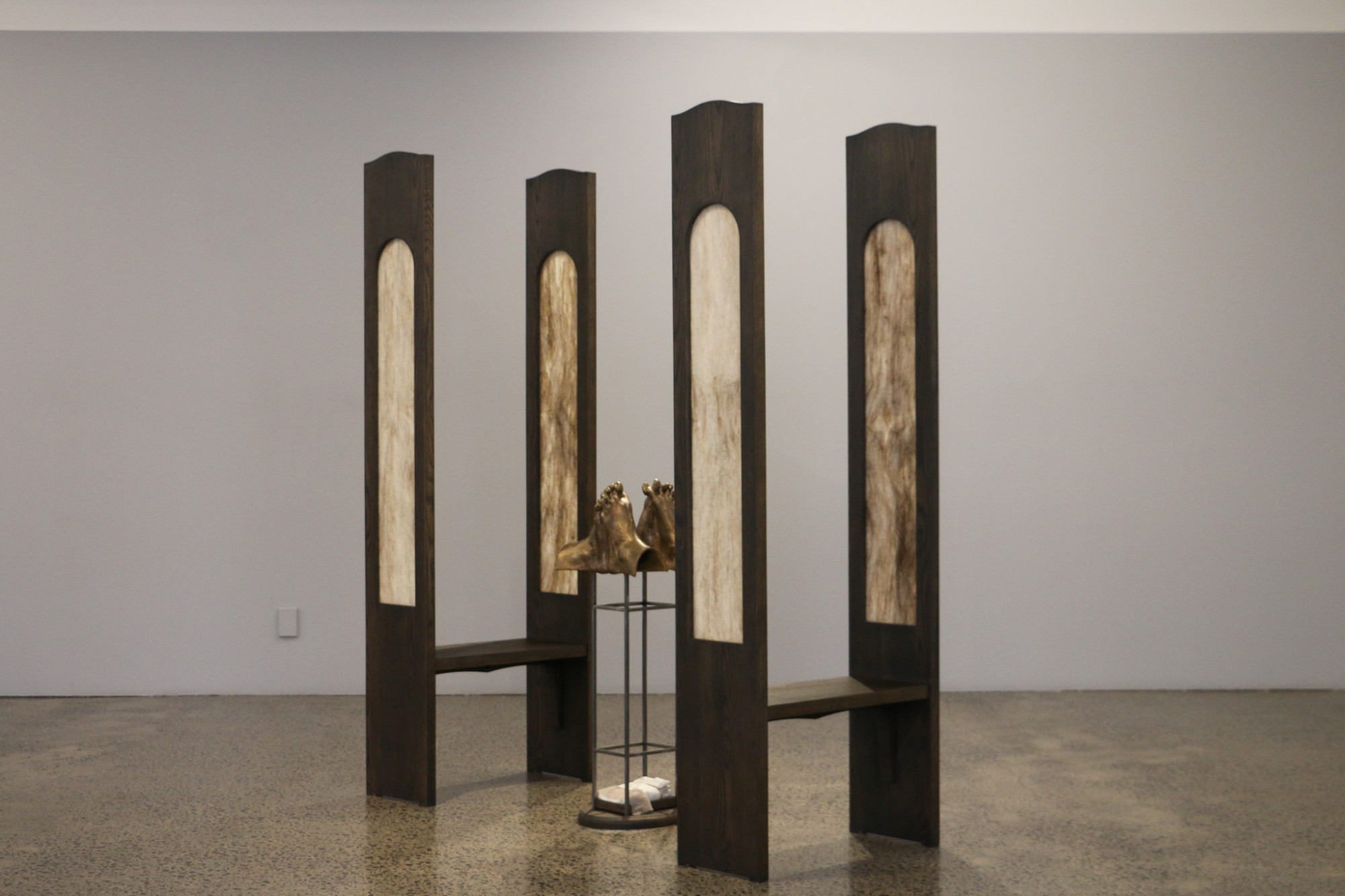
Erika Holm, Apology, 2025, bronze cast feet, steel, American oak, cotton, felt, 96 x 38 x 36 cm; chairs in American oak, felted panel with wood and human hair, each 192 x 68 x 30 cm.
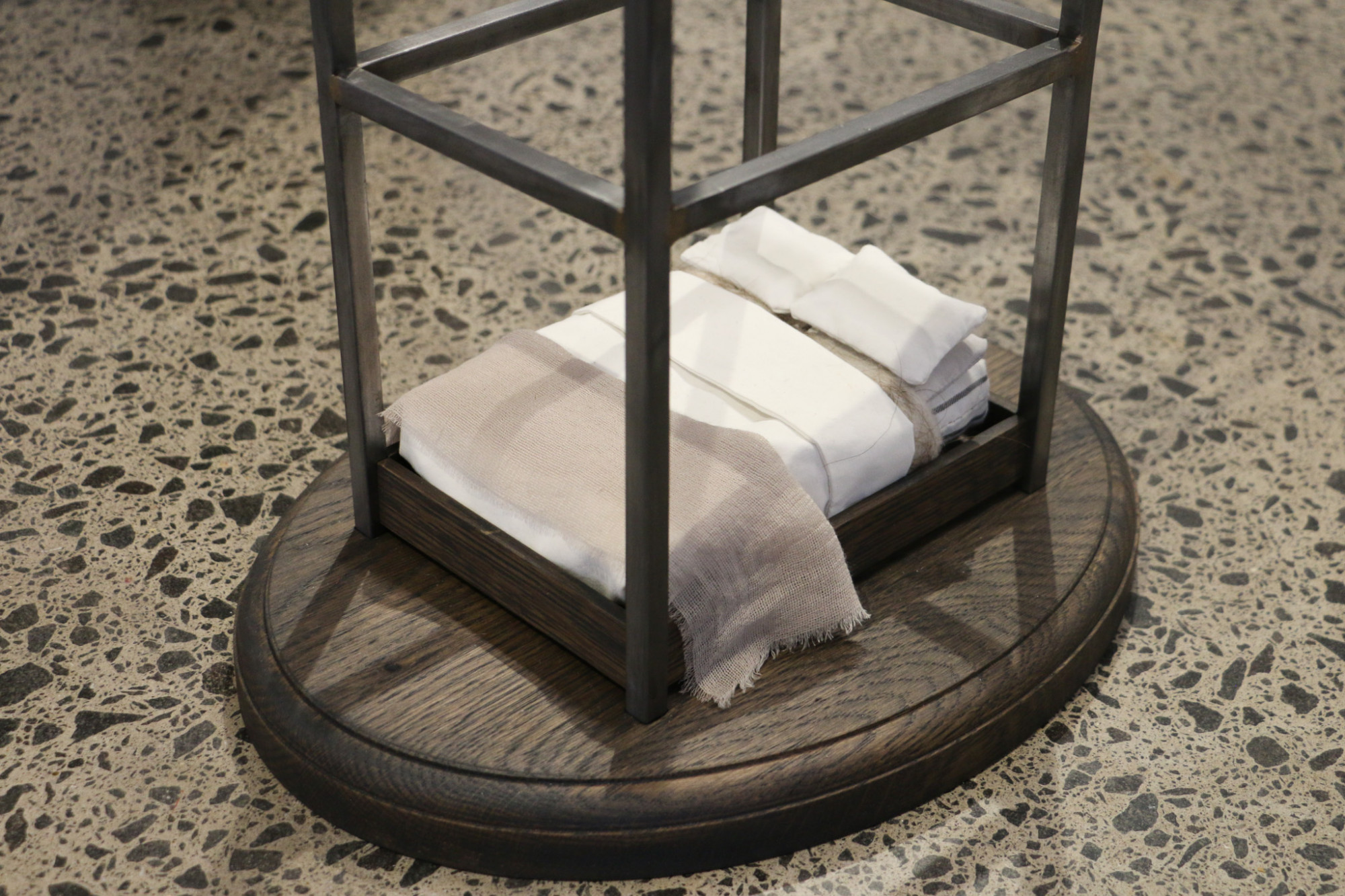
Erika Holm, Apology, 2025. Detail.
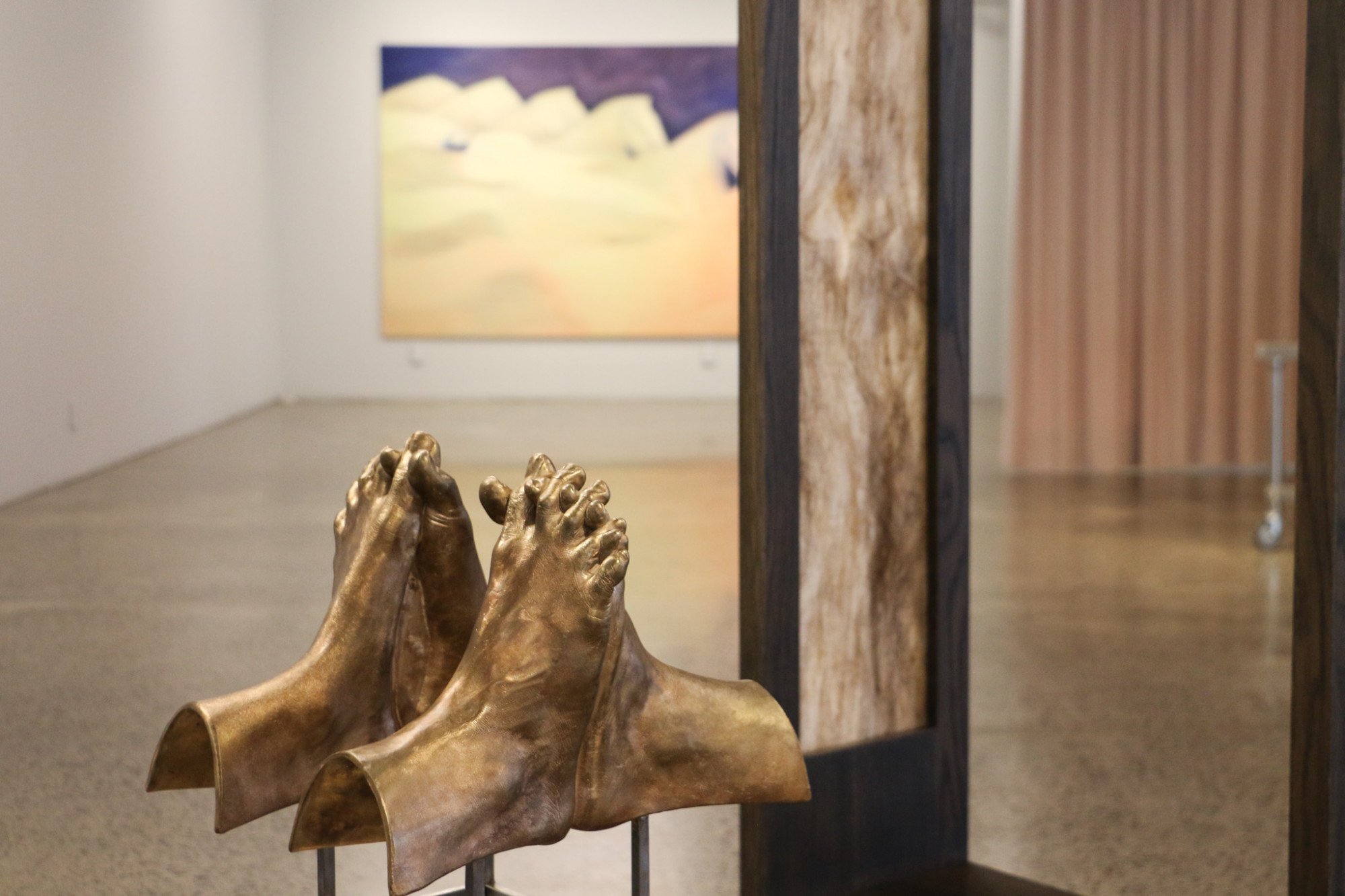
Erika Holm, Apology, 2025. Detail.
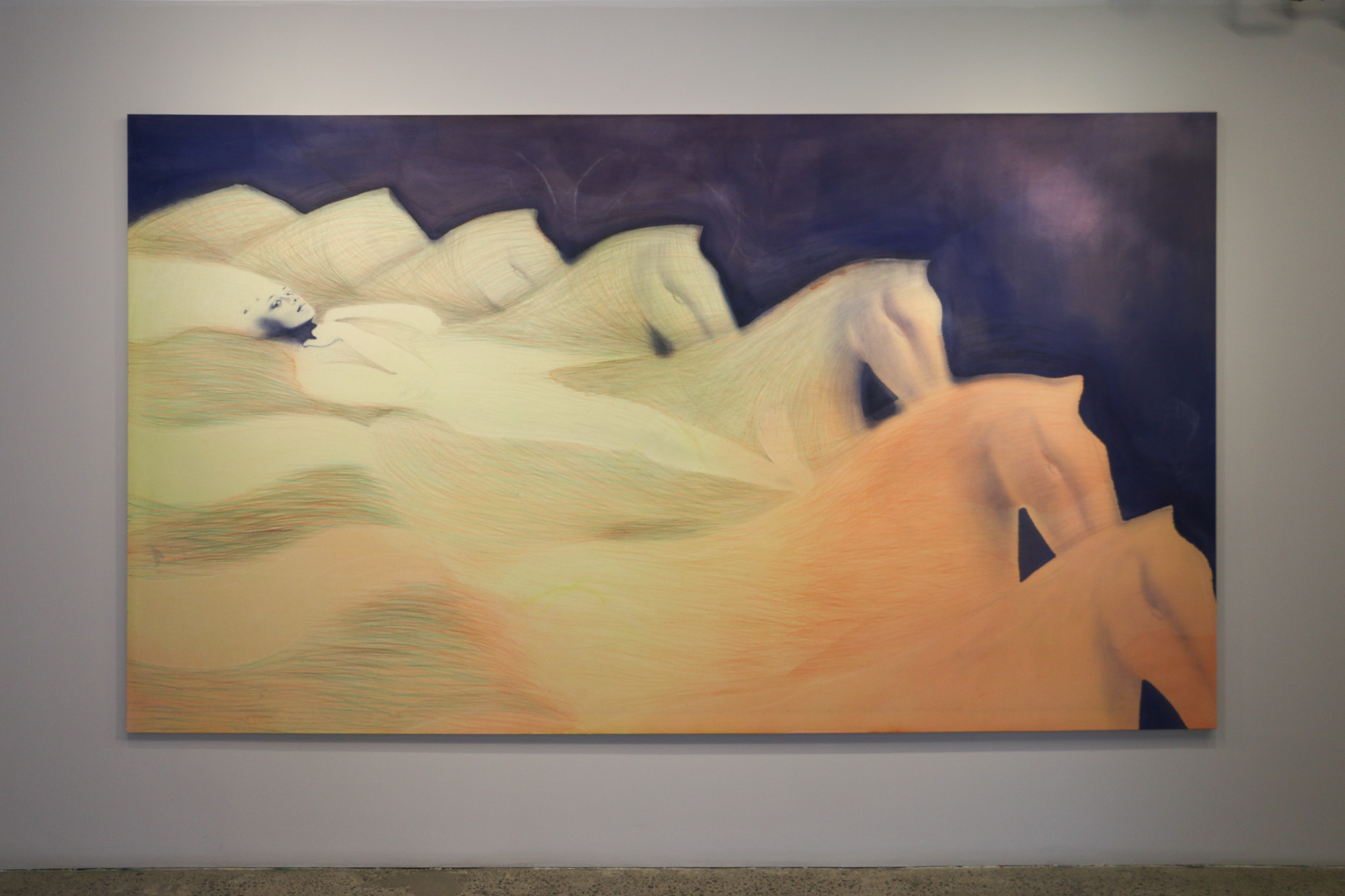
Tarika Sabherwal, The rush, 2025, ink, pencil, marker on stretched calico, 198 x 300 cm.
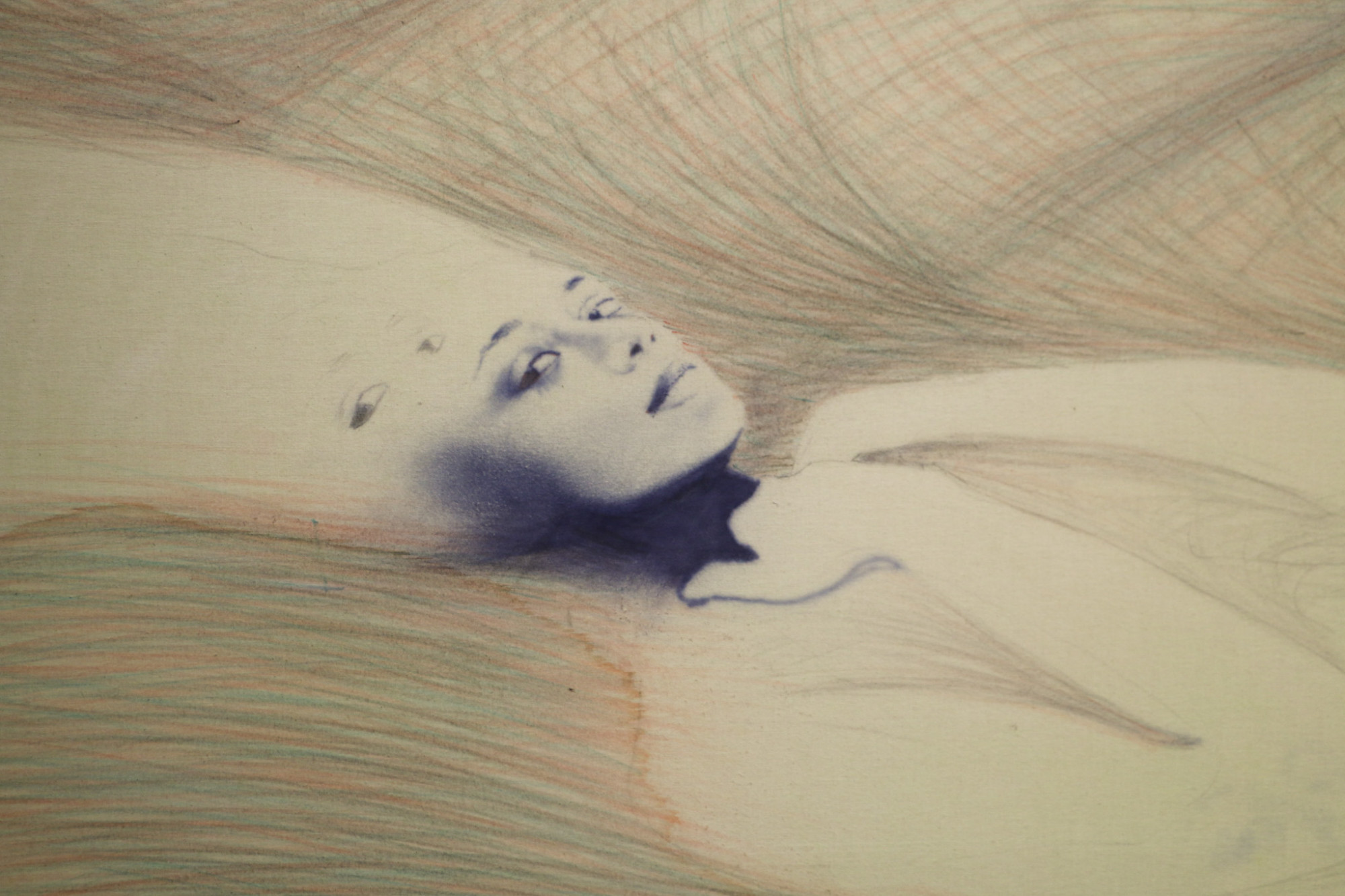
Tarika Sabherwal, The rush, 2025, ink, pencil, marker on stretched calico, 198 x 300 cm. Detail.
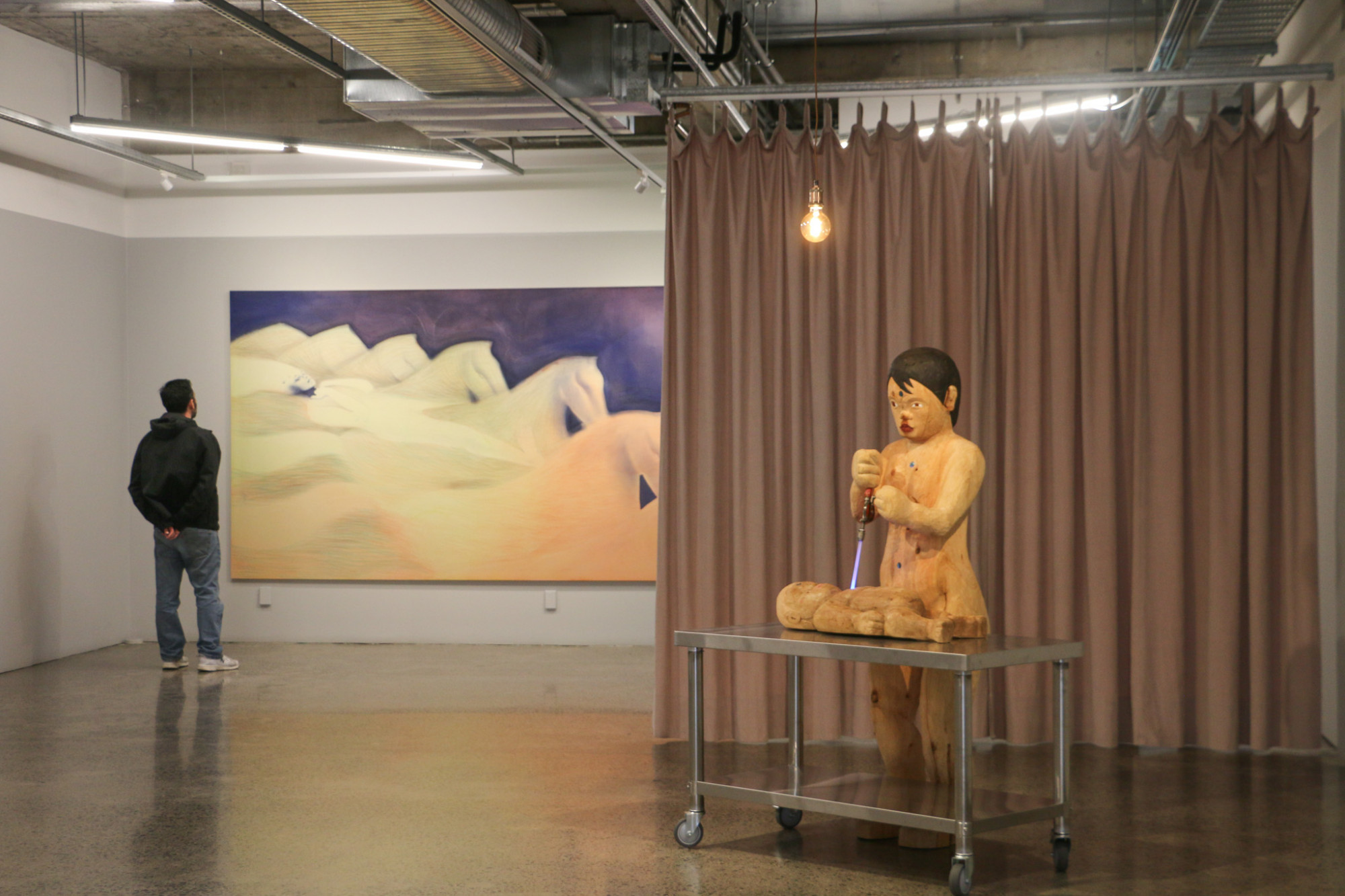
Echo, 2025. Installation view.
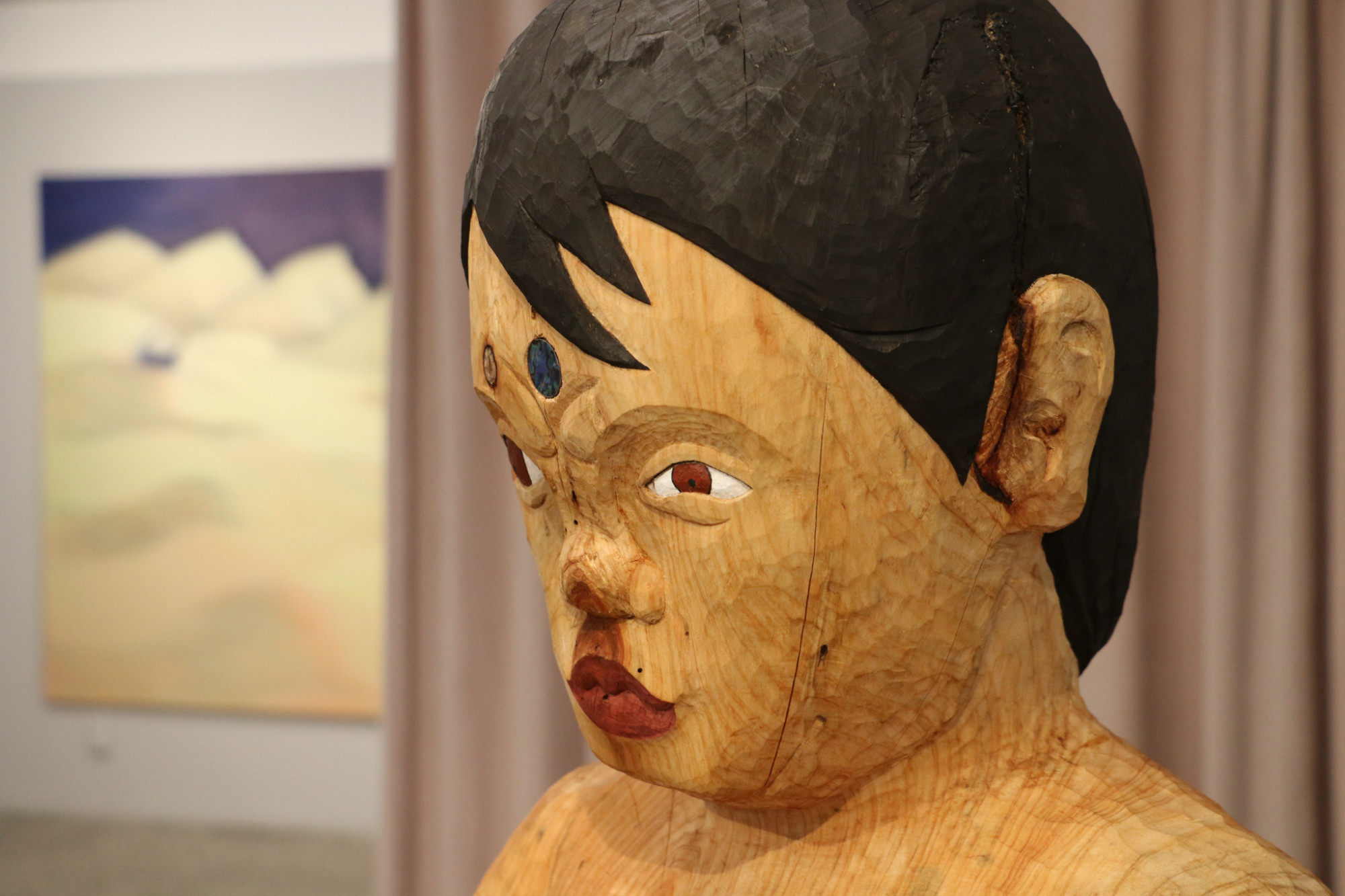
Ngaroma Riley, Tihei... mauri ora!, 2025, elm, macrocarpa, mother of pearl, paua, hand drill, acrylic rod, LED, electrical components, 160 x 120 x 97 cm. Detail.
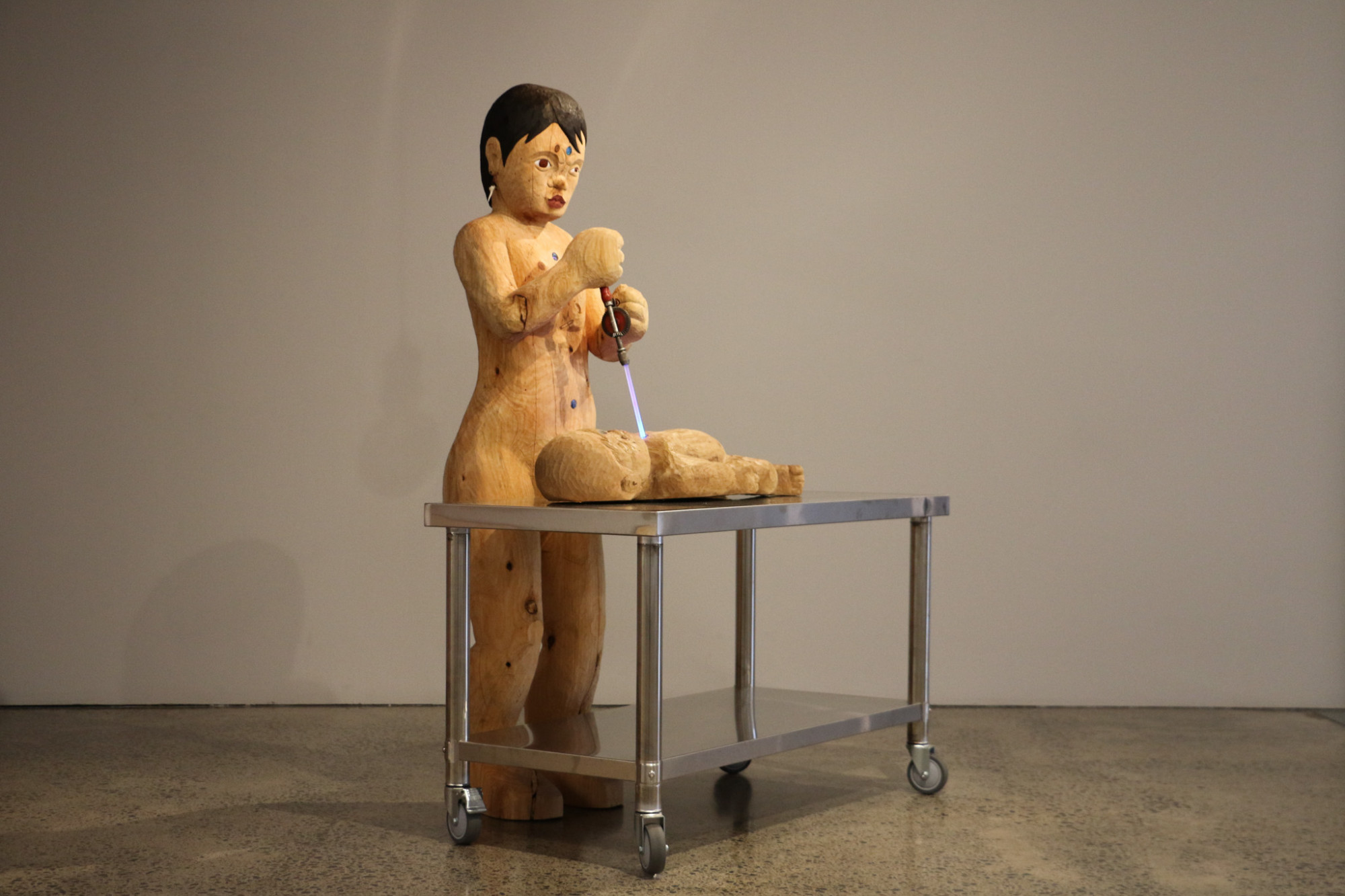
Ngaroma Riley, Tihei... mauri ora!, 2025, elm, macrocarpa, mother of pearl, paua, hand drill, acrylic rod, LED, electrical components, 160 x 120 x 97 cm.
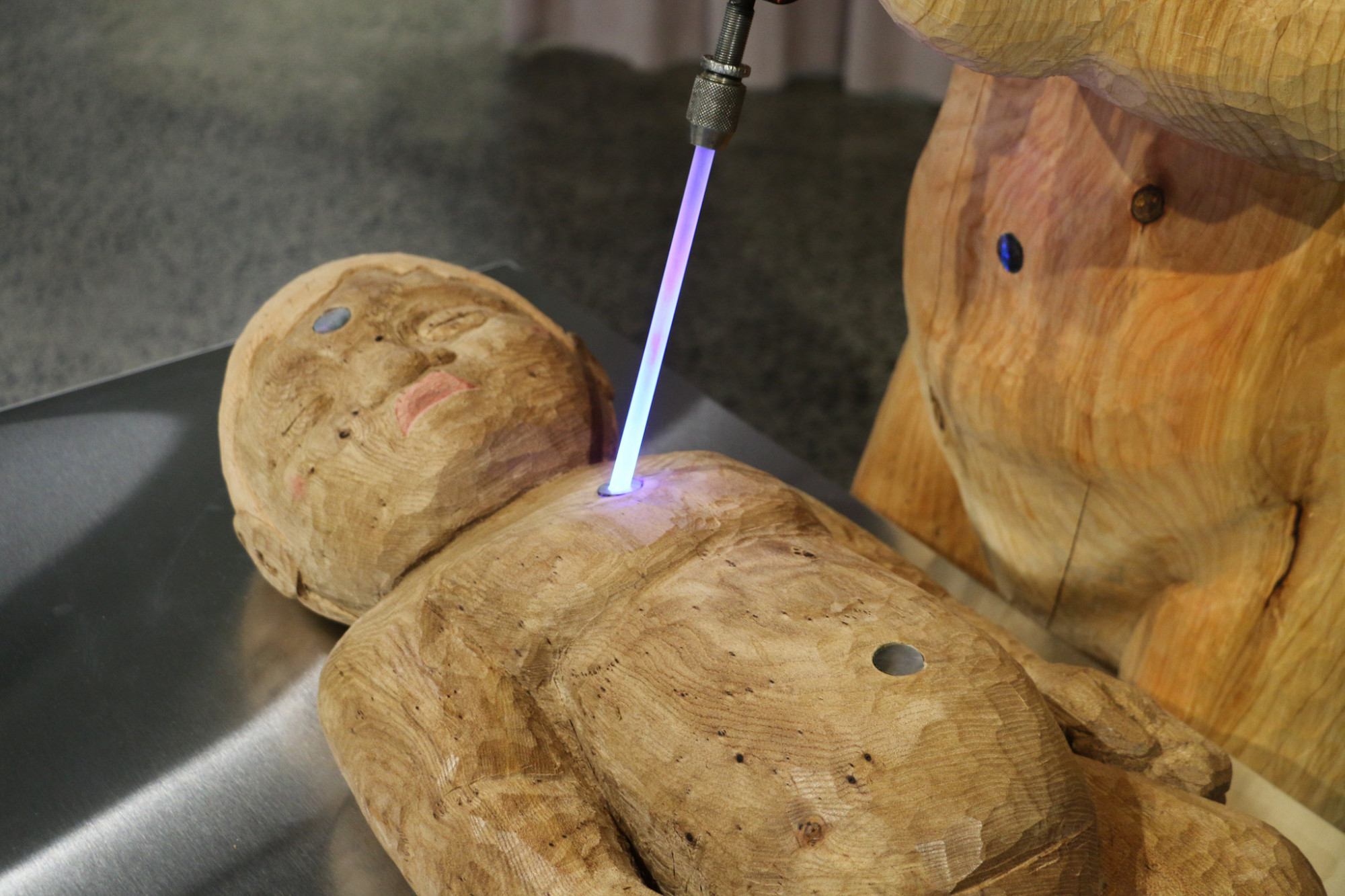
Ngaroma Riley, Tihei... mauri ora!, 2025, elm, macrocarpa, mother of pearl, paua, hand drill, acrylic rod, LED, electrical components, 160 x 120 x 97 cm. Detail.
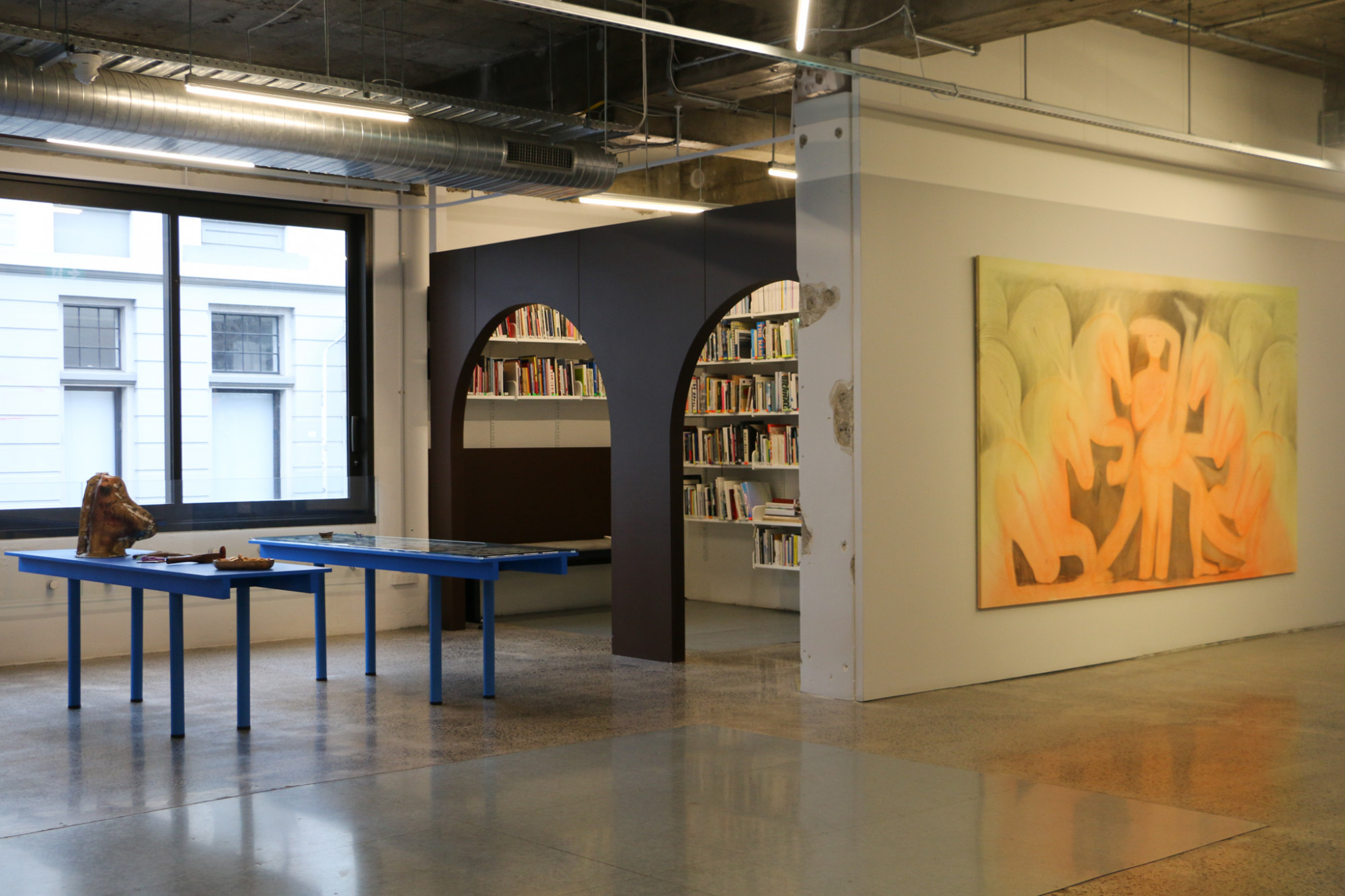
Echo, 2025. Installation view.
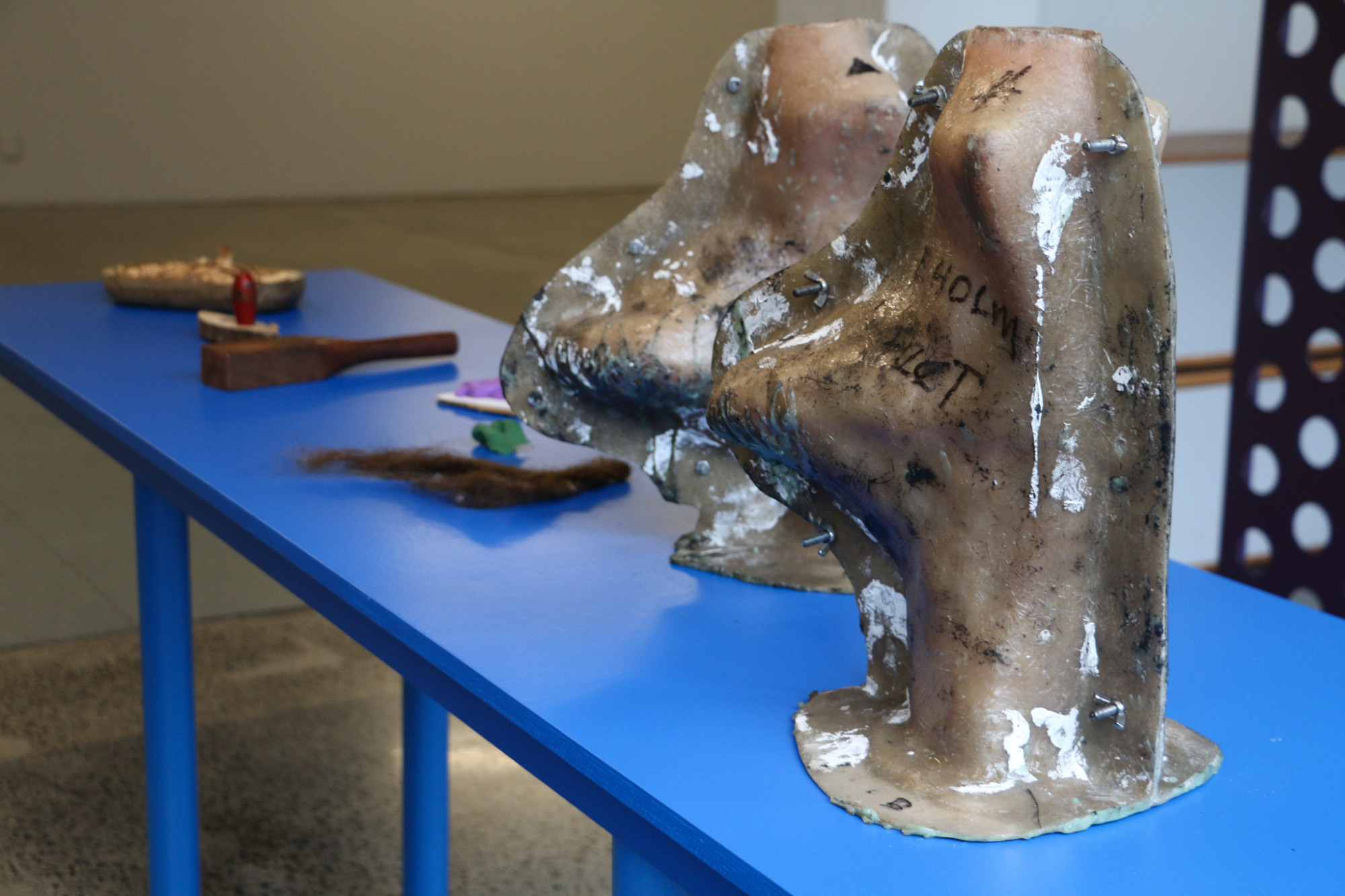
Ephemera, various material from the studios of Erika Holm, Ngaroma Riley, and Tarika Sabherwal. The material includes casts, drawings, and other preparatory matter associated with the production of artworks for this exhibition.
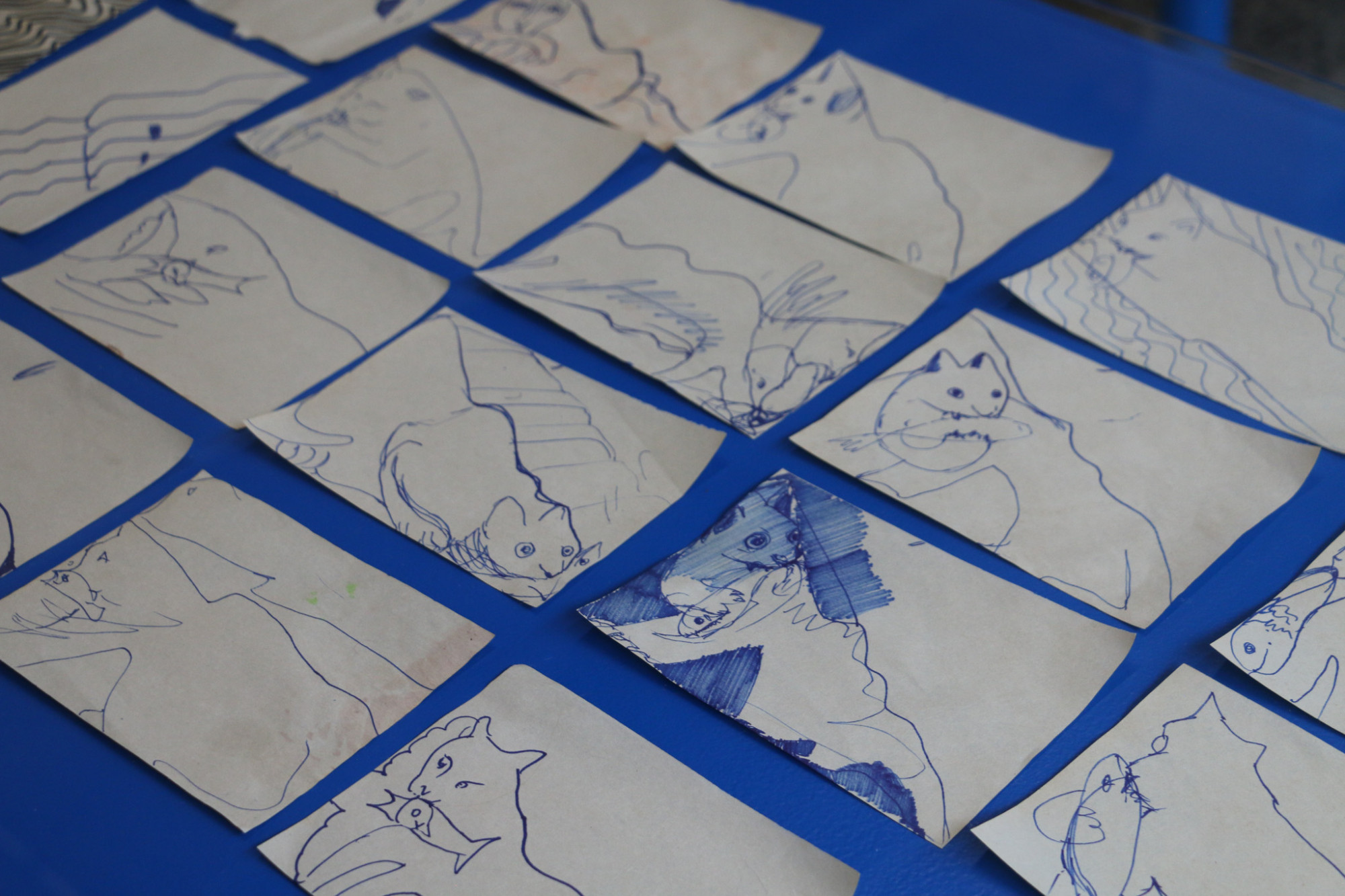
Ephemera, various drawings and material from the studio of Tarika Sabherwal. Detail.
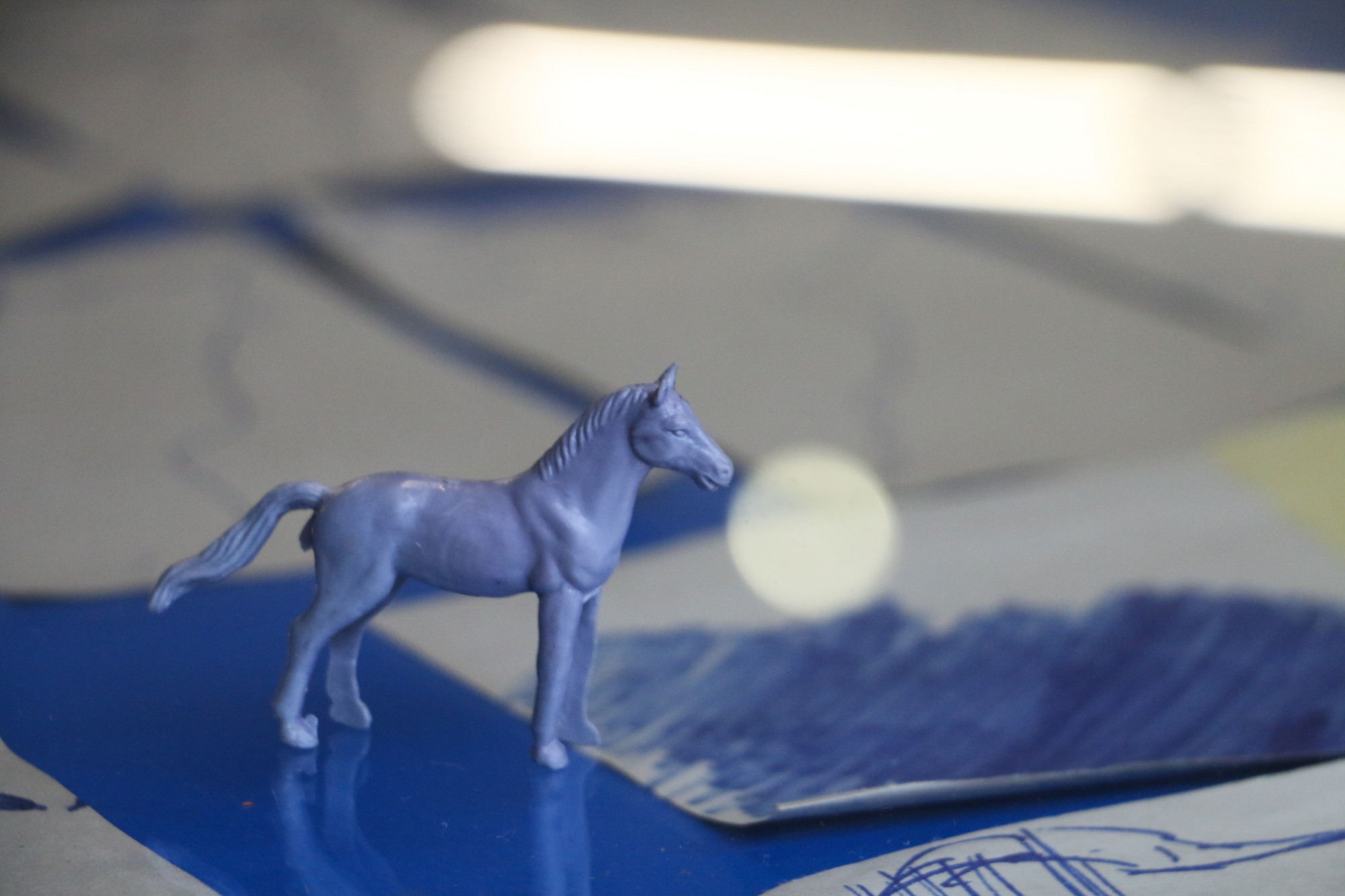
Ephemera, various drawings and material from the studio of Tarika Sabherwal. Detail.
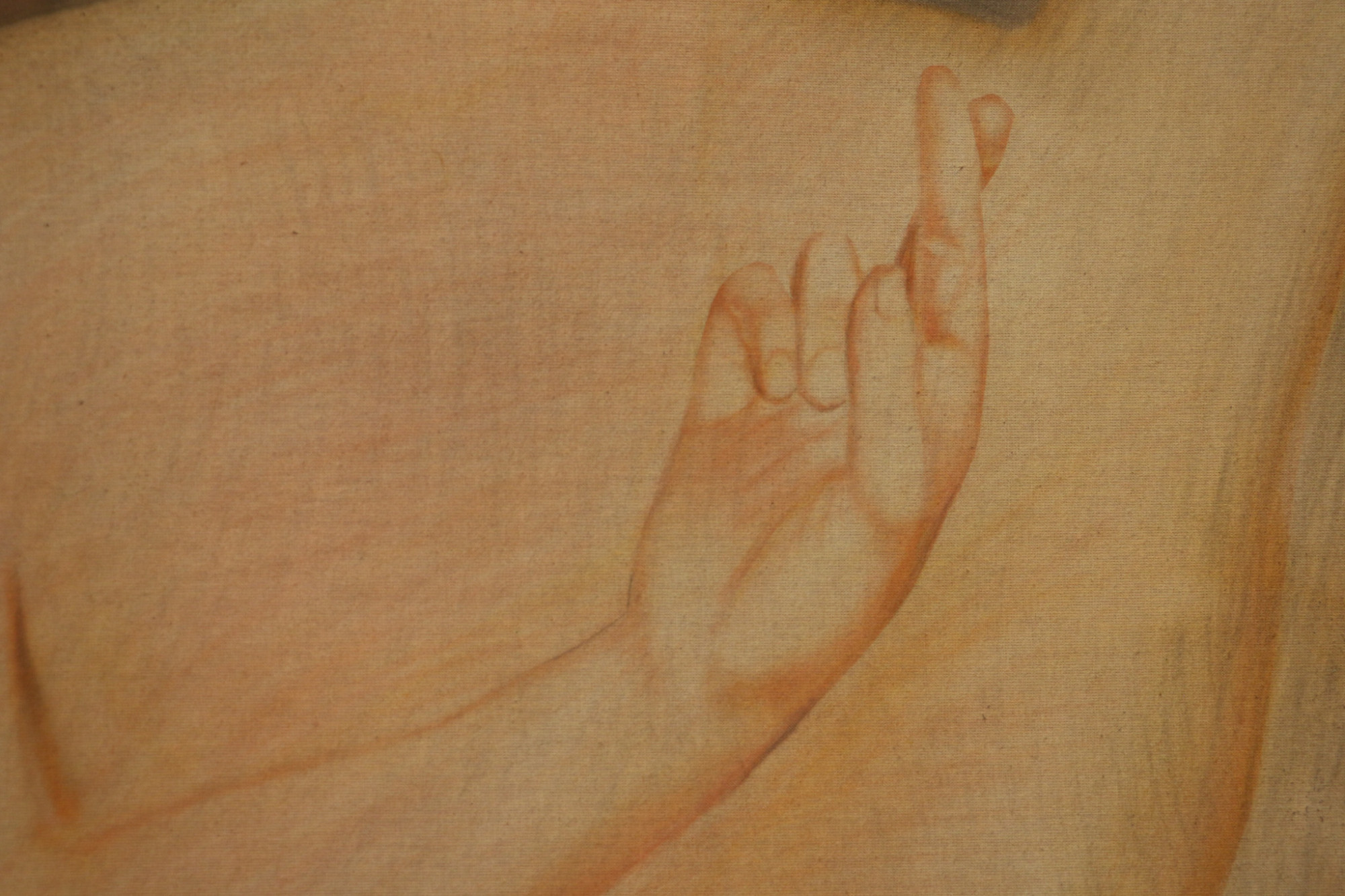
Tarika Sabherwal, Off beat, 2025, ink, pencil, marker on stretched calico, 198 x 300 cm. Detail.
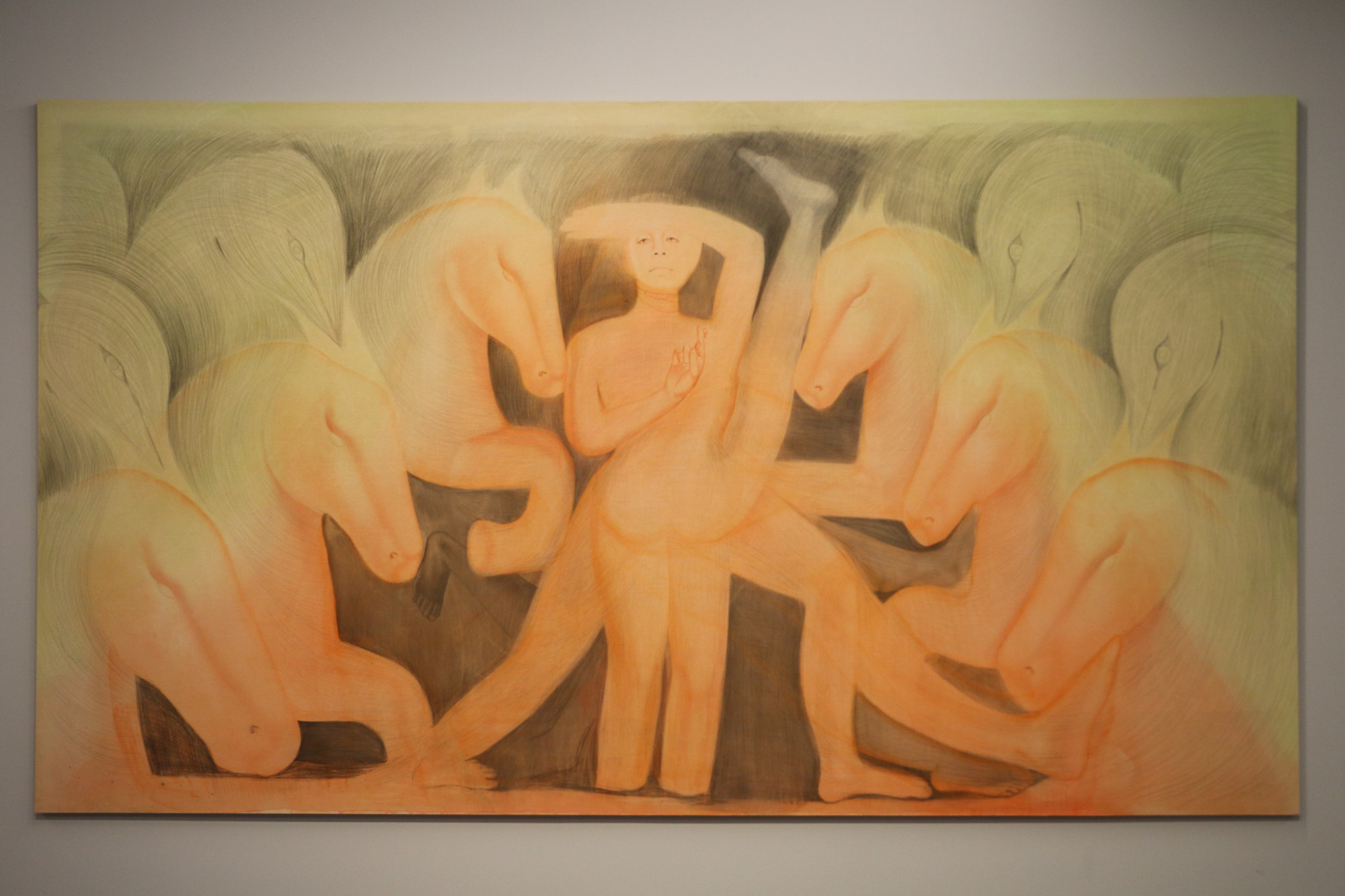
Tarika Sabherwal, Off beat, 2025, ink, pencil, marker on stretched calico, 198 x 300 cm.
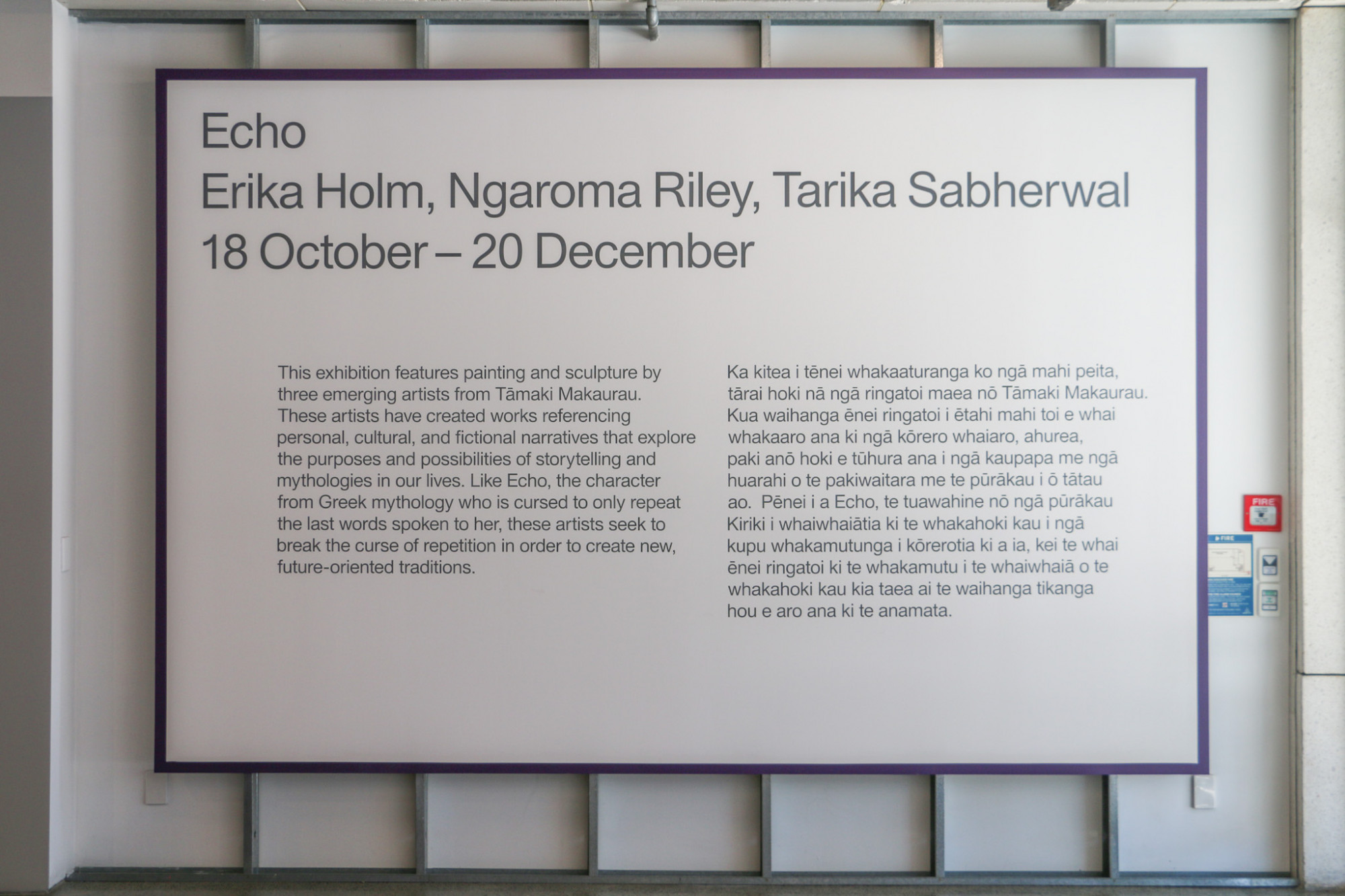
This exhibition features painting and sculpture by three emerging artists from Tāmaki Makaurau. These artists have created works referencing personal, cultural, and fictional narratives that explore the purposes and possibilities of storytelling and mythologies in our lives. Like Echo, the character from Greek mythology who is cursed to only repeat the last words spoken to her, these artists seek to break the curse of repetition in order to create new, future-oriented traditions.
This exhibition is presented with the support of our strategic partner the Chartwell Trust.
View full exhibition text
In the myth of Echo and Narcissus, Echo is a wood nymph cursed to only repeat the last words spoken to her. After falling in love with Narcissus, who was cursed to fall in love with his own reflection, Echo concealed her shame by hiding herself in the forest. Over time her body disappeared, leaving only her voice and her bones. The enduring influence of Greek mythology on Western culture is vast and evident still, not least demonstrated by a shared familiarity with these characters’ names—if not their origins, then their subsequent meanings and affiliations. However, if these stories remain relevant in contemporary life, what of other mythologies and from elsewhere? The three artists in this exhibition contend with the possibilities of mythology through their own methods of storytelling. They resist Echo’s curse of repetition by forging new narratives, developing vocabularies that speak to their own experience of the world.
Tarika Sabherwal builds on a practice that draws on imagery taken from classical Hindu literature. Raised secular in India as a child, Tarika’s practice looks to the way Hindu teachings are expressed through everyday family ritual. Her work is interested in the pictorial and the material of painting to interrogate how meaning is made through the making of images. In this exhibition, she presents two large-scale paintings with a band of horses appearing across both. In The rush (2025), a figure appears floating as if being carried downstream among a sea of horses. In Off beat (2025), a figure stands with horses surrounding her like flames. The imagery here is drawn from the story of the Agni Pariksha, a trial by fire undertaken by the Hindu goddess Sita to prove her chastity and purity. Sabherwal depicts her own partner as the central protagonist in these paintings, and in doing so challenges traditionally held values and questions casually held notions of femininity, strength, and power.
In Ngaroma Riley’s Tihei... mauri ora! (2025), a carved tekoteko stands over a small figure laying on a metal surgery-cum-workshop table. The tekoteko holds a hand drill emitting a beam of light into the figure’s manawa ora—its physical heart—imbuing it with mauri. In this work, Ngaroma playfully draws together a range of creation stories pertaining to Māori cosmology, popular culture, and autobiography. In one reading it references Tāne Mahuta, who breathed life into the first woman which transformed her from clay into the living being named Hineahuone. In other readings, through its perhaps more illustrative aspects, Tihei... mauri ora! also references the macabre Frankenstein or sorrowful Geppetto. The work is also a self-portrait of the artist’s journey to whakairo, through the navigation of customary and contemporary knowledge systems.
Erika Holm’s Apology (2025) creates mythology through a site of apologetic exchange. At the centre of the artwork, a set of interlocked bronze-cast feet are suspended on a brazed steel frame. Enclosed in the four posts of the frame, a miniature bed sits atop a wooden pedestal. Two high bench seats straddle the central composition, both facing one another. Within each seat, the walls hold a felted screen of human hair and wool. Collected gradually, the hair comes from people close to the artist, such as friends or partners. Audiences are invited to sit and place their hands in the sculpture and to touch fingertips with someone opposite. Here, feelings of shame that might shadow an apology are bound in bodily experience. The felted textiles of the chairs could reference the Greek Fates or Moirai, who would spin, measure, and cut yarn determining the destiny of mortals and immortals alike. The cavern of the bronze feet allows only the
slightest touch, speaking to the toils of attempting intimacy. In Apology, Erika creates ritual with narrative and action to ameliorate the often-absurd extremes of emotion.
Mythology can function as fable by giving narrative to the mayhem and disorder of existence. At their best, myths allow for contradiction, nuance, complexity, and multiplicity. At worst, long told stories become inherited wisdoms held as truths. These artists use various mythologies, or storytelling more broadly, as sites of analysis to explore some of life’s more uncertain and abstract moments.
Biographies
-
Erika Holm is an artist based in Tāmaki Makaurau. Her work explores desire, the feminised excess of ornamentation, and objects as vessels of memory. With a background in furniture-making, she incorporates wood and metal, as well as bodily matter, into her sculptures. Holm has worked at Apartmento Contemporary Furniture and is currently a workshop technician at Auckland University of Technology. Her work has been shown at Ivan Anthony, Grace Aotearoa, and Michael Lett.
-
Ngaroma Riley is an artist, curator and organiser of Te Rarawa, Te Aupōuri and Pākēha descent. A founder of Te Ana o Hine, a carving shed led by women based at Te Tuhi in Tāmaki Makaurau, Riley began her carving journey making buddhist statues while working in Japan. Since returning to Aotearoa in 2020 she has completed a Certificate in Whakairo at Te Wānanga o Aotearoa and has exhibited with Season Aotearoa in Tāmaki Makaurau and Te Ara i Whiti as part of Te Tairāwhiti Arts Festival.
-
Tarika Sabherwal is an artist based in Tāmaki Makaurau who explores ways to narrativise personal relationships and landscapes within a South Asian mythological framework. Exploring how ancient stories can be reflected in our current lives, Sabherwal’s work primarily uses an airbrush technique and has been experimenting with deconstructing the canvas, drawing inspiration from South Asian textile traditions. Sabherwal has had exhibitions with Khōj in New Delhi, Season Aotearoa and RM Gallery in Tāmaki Makaurau, and Jhana Millers Gallery in Te Whanganui-a-Tara.
Events
In focus with Biljana Ciric and Trần Lương: Learning and unlearning spaces
FAM Art Tour
Question time: A lecture by Yolande Zola Zoli van der Heide
Artist talk with Erika Holm, Ngaroma Riley, and Tarika Sabherwal
Audio Described Tour
Deep dive: Lecture by Kairauhī Curator Robbie Handcock
East Street Block Party
Documents
echo-exhibition-guide.pdf
2025 programme
Each year we set one question which our exhibitions and events orbit in the company of artists and audiences. Across the year, we explore what this question offers us and what artworks and their authors can weave together. In 2025, we ask “is language large enough?” You can think of this as one exhibition in four parts, as a score played across a calendar, or maybe even as a forest. Join us.
Lubaina Himid
Michael Parekōwhai
Ethan Braun, Lina Grumm
Darcell Apelu
Martha Atienza
Heidi Brickell
Buck Nin
Yee I-Lann
Erika Holm
Ngaroma Riley
Tarika Sabherwal