After the undercurrents
Gordon Bennett, Emily Karaka
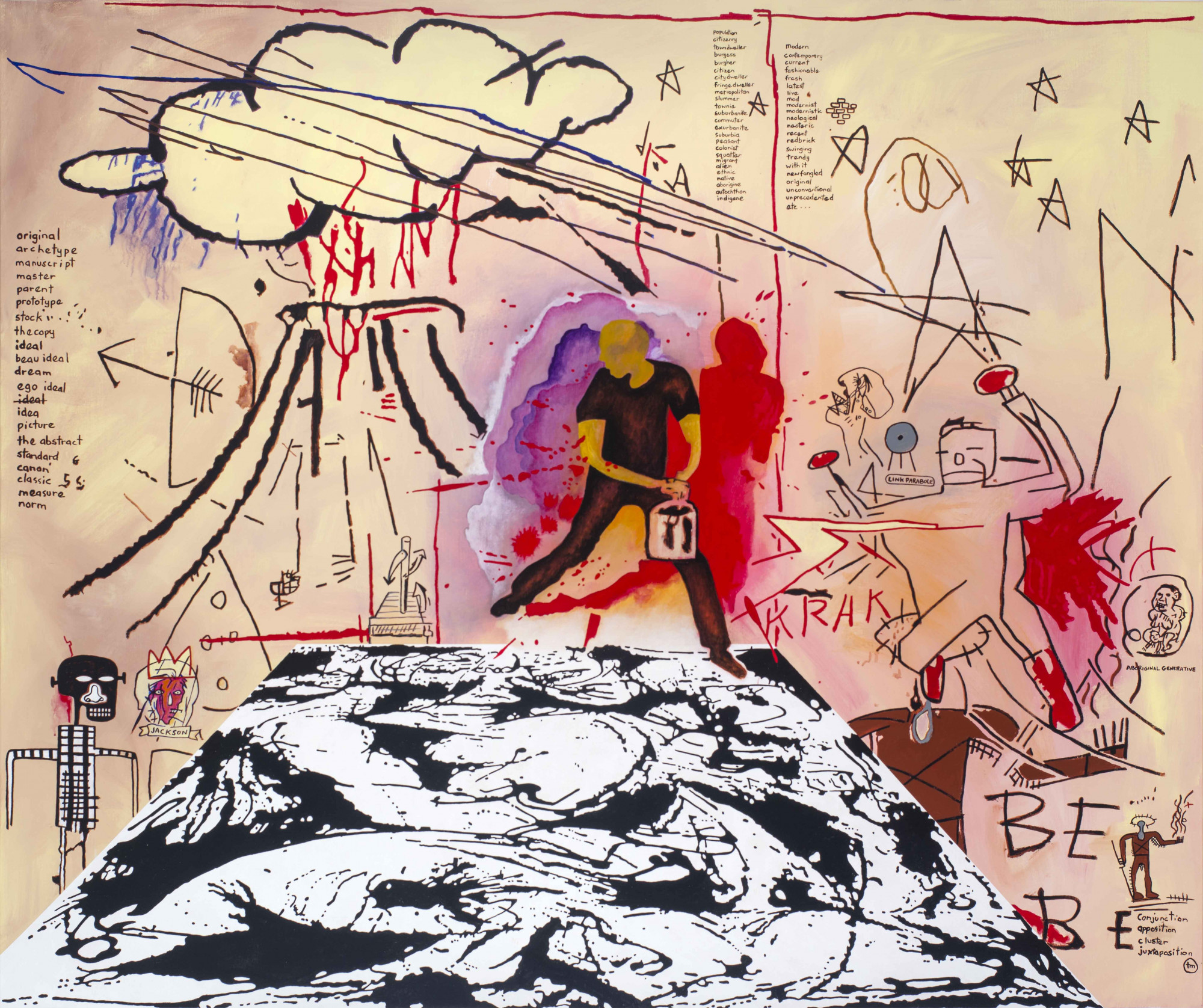
Gordon Bennett, Notes to Basquiat: Volcano II , 2001.
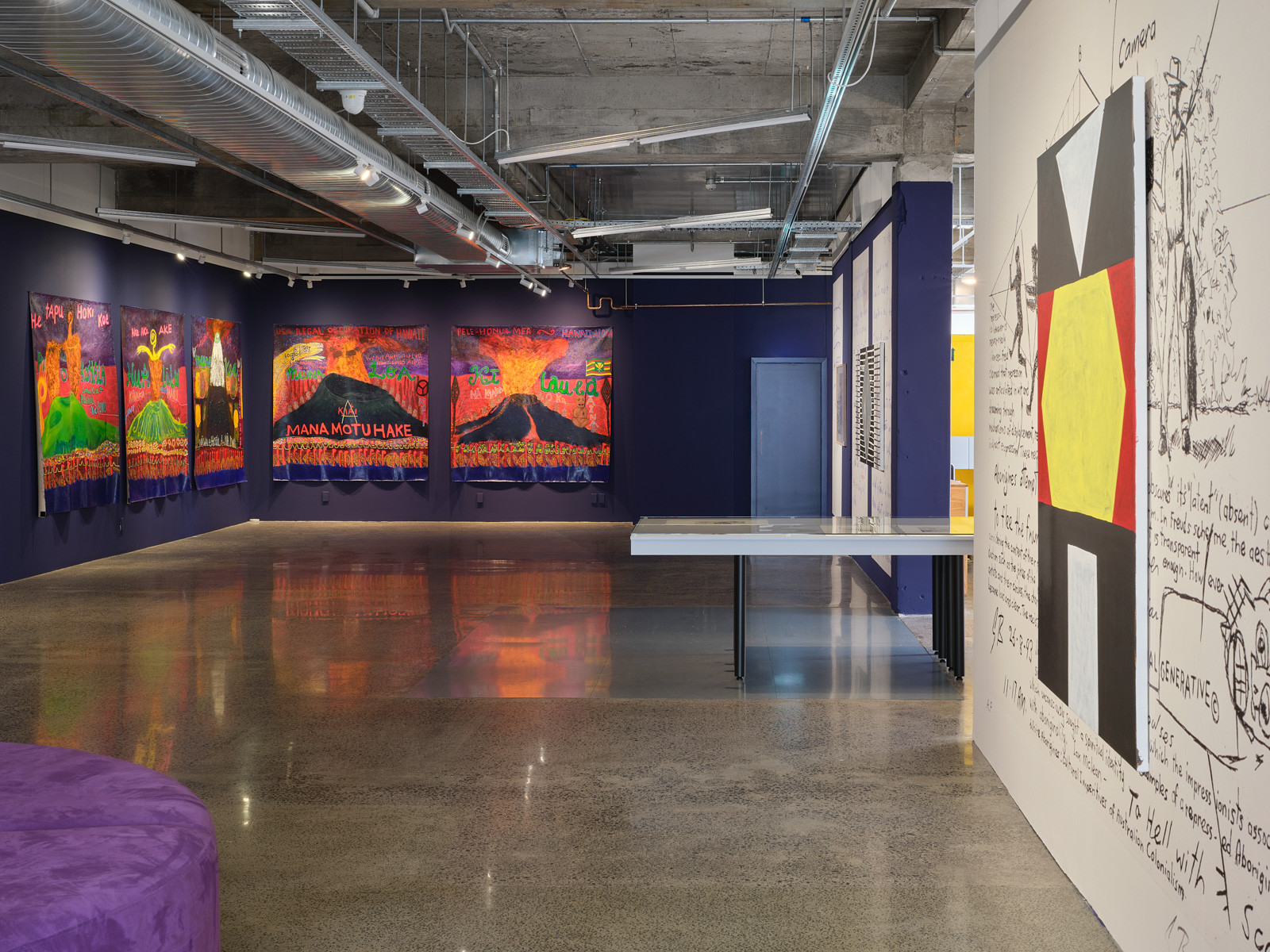
After the undercurrents, 2026. Installation view.
After the undercurrents, 2026. Installation view.
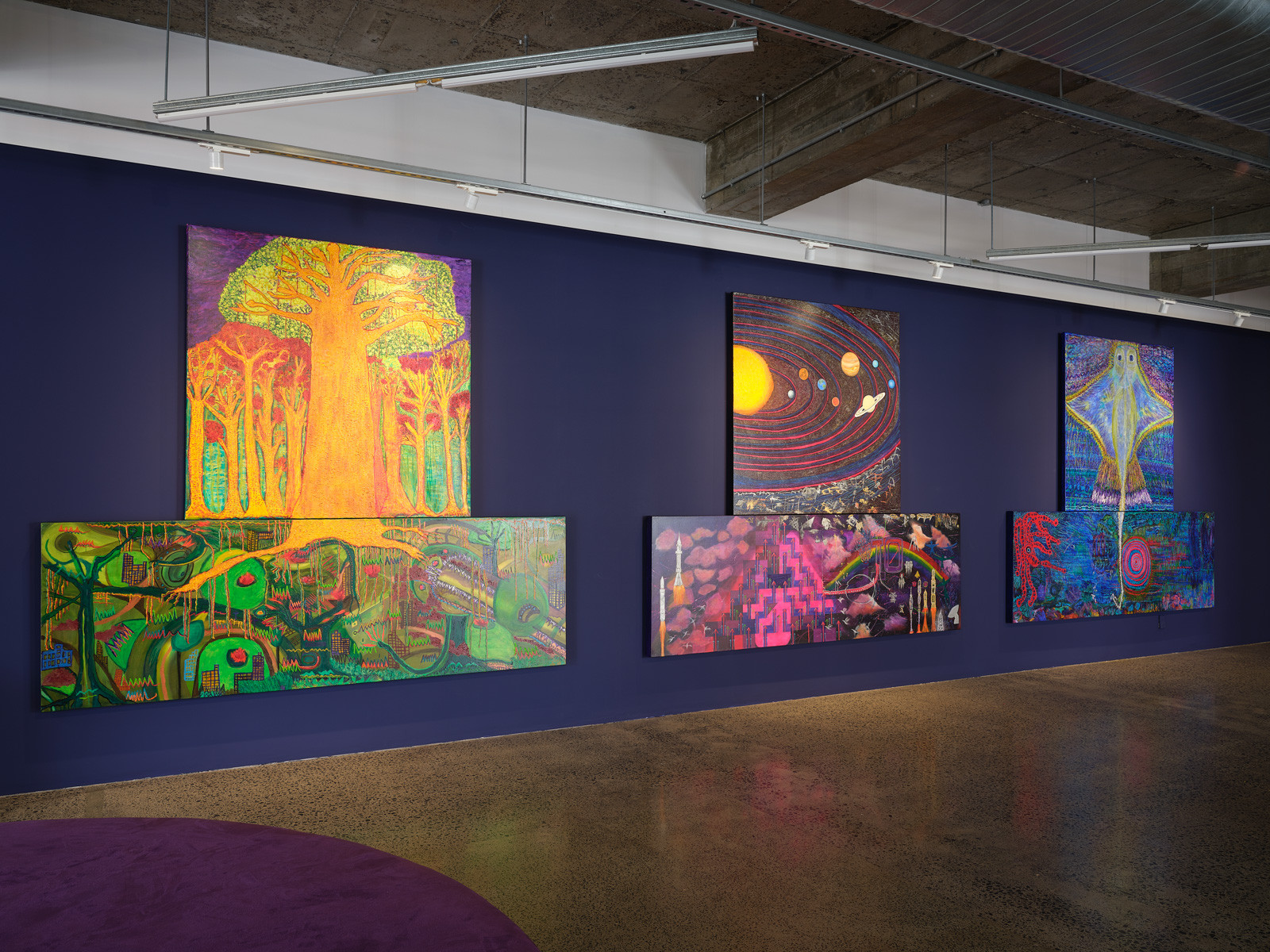
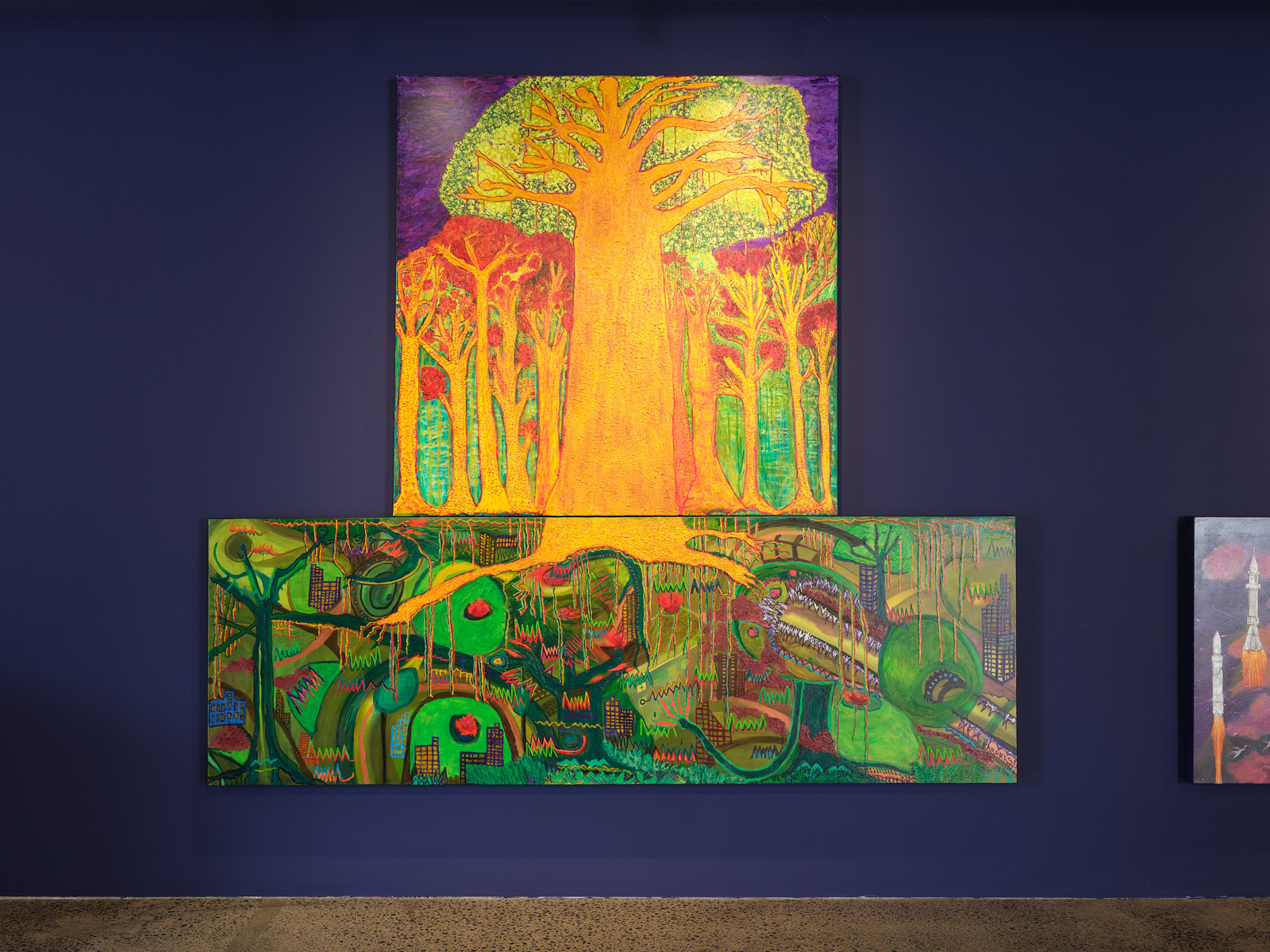
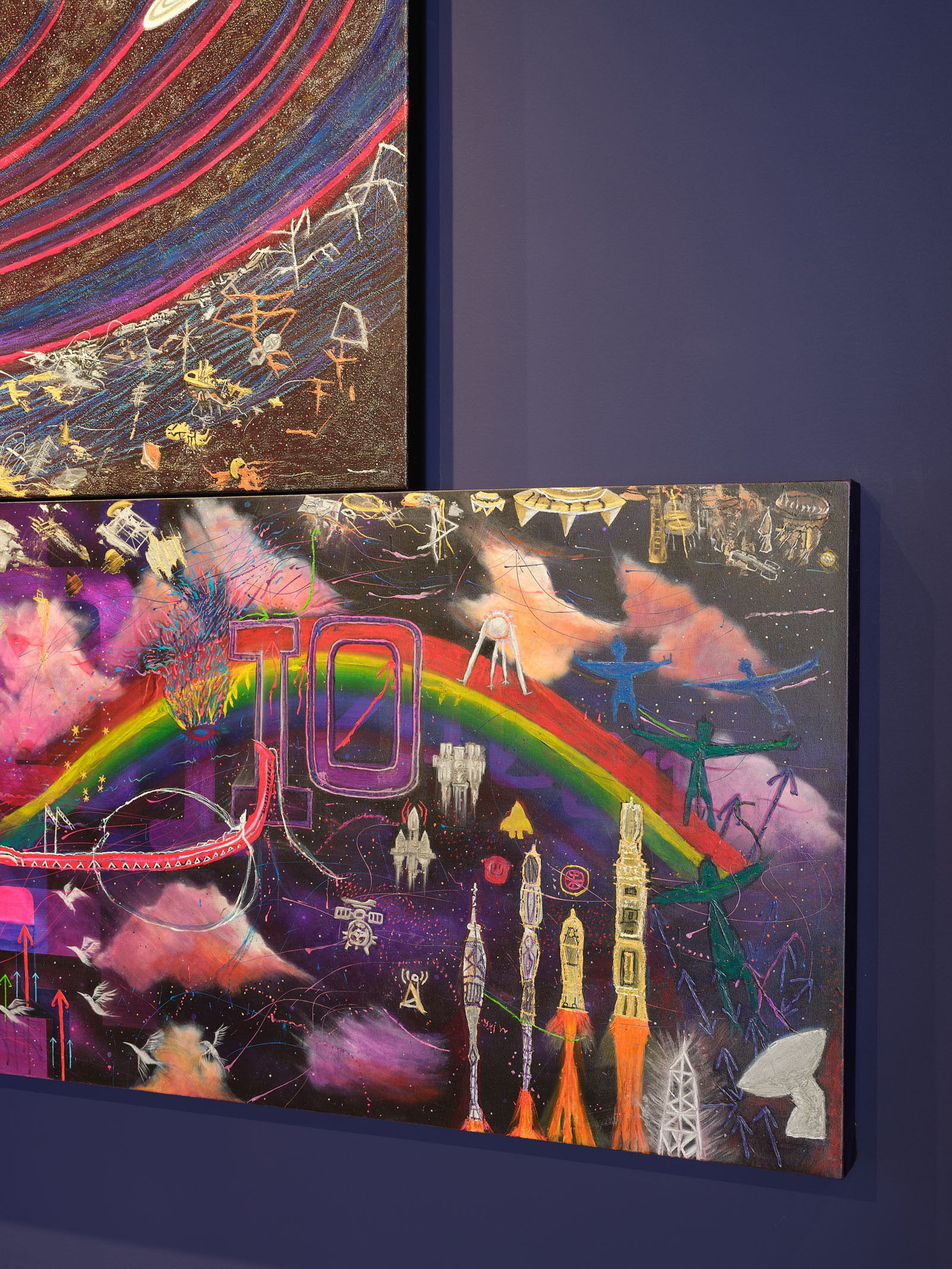
Emily Karaka, LAW A?, 2026, oil, acrylic, modelling paste on canvas, triptych, three elements 1500 x 1500 mm,
one element 2725 x 905 mm, two elements 2750 x 905 mm.
Emily Karaka, LAW A?, 2026. Detail.
Emily Karaka, LAW A?, 2026. Detail.
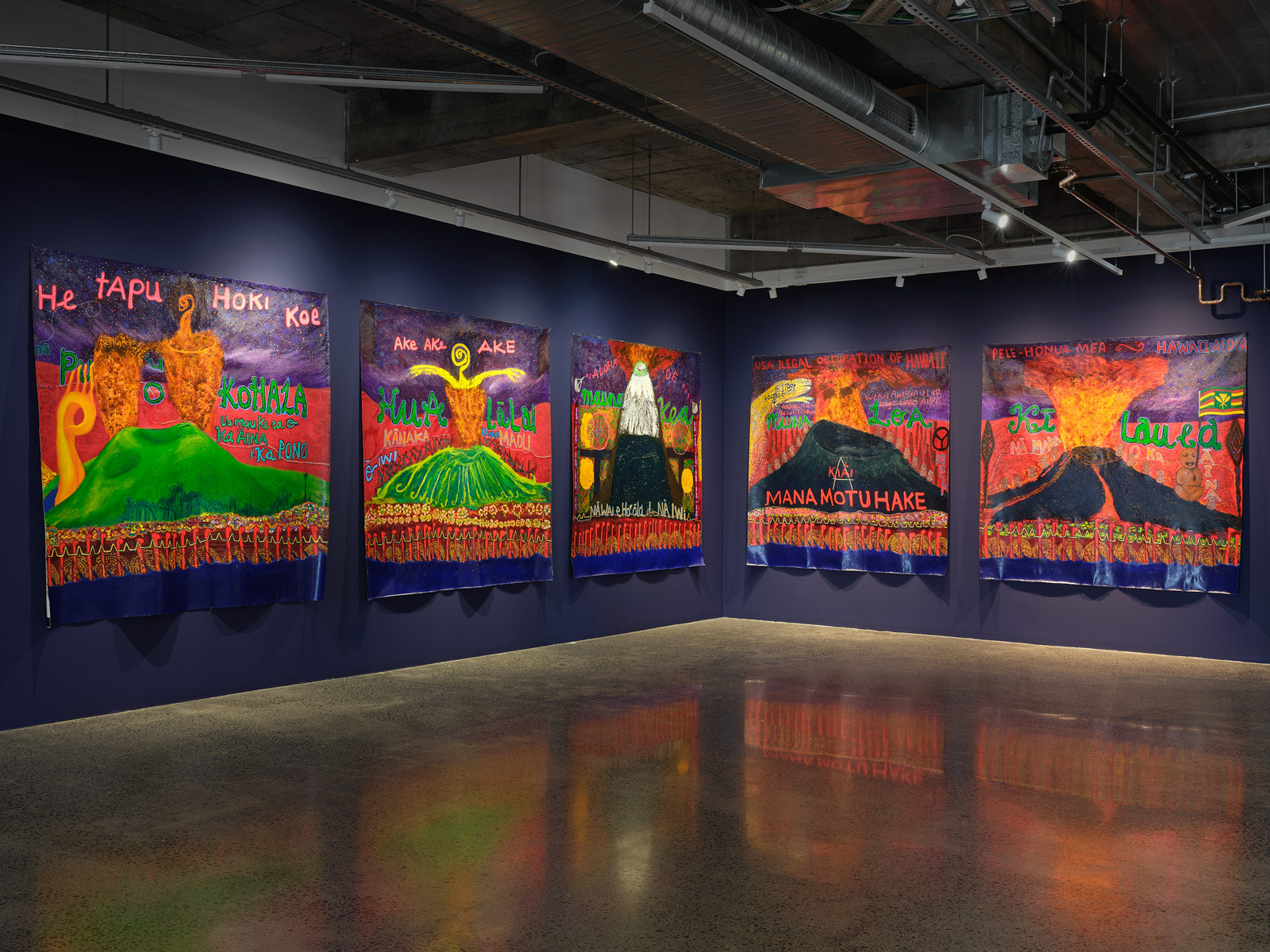
Emily Karaka, Kohala 1, 2024, mixed media on canvas, 1950 x 1960 mm; Hualālai, 2024, mixed media on canvas, 1950 x 1960 mm; Mauna Kea, 2024, mixed media on canvas, 1950 x 1960 mm; Mauna Loa, 2024, mixed media on canvas, 1950 x 1960 mm; Kī lauea, 2024, mixed media on canvas, 2035 x 1960 mm.
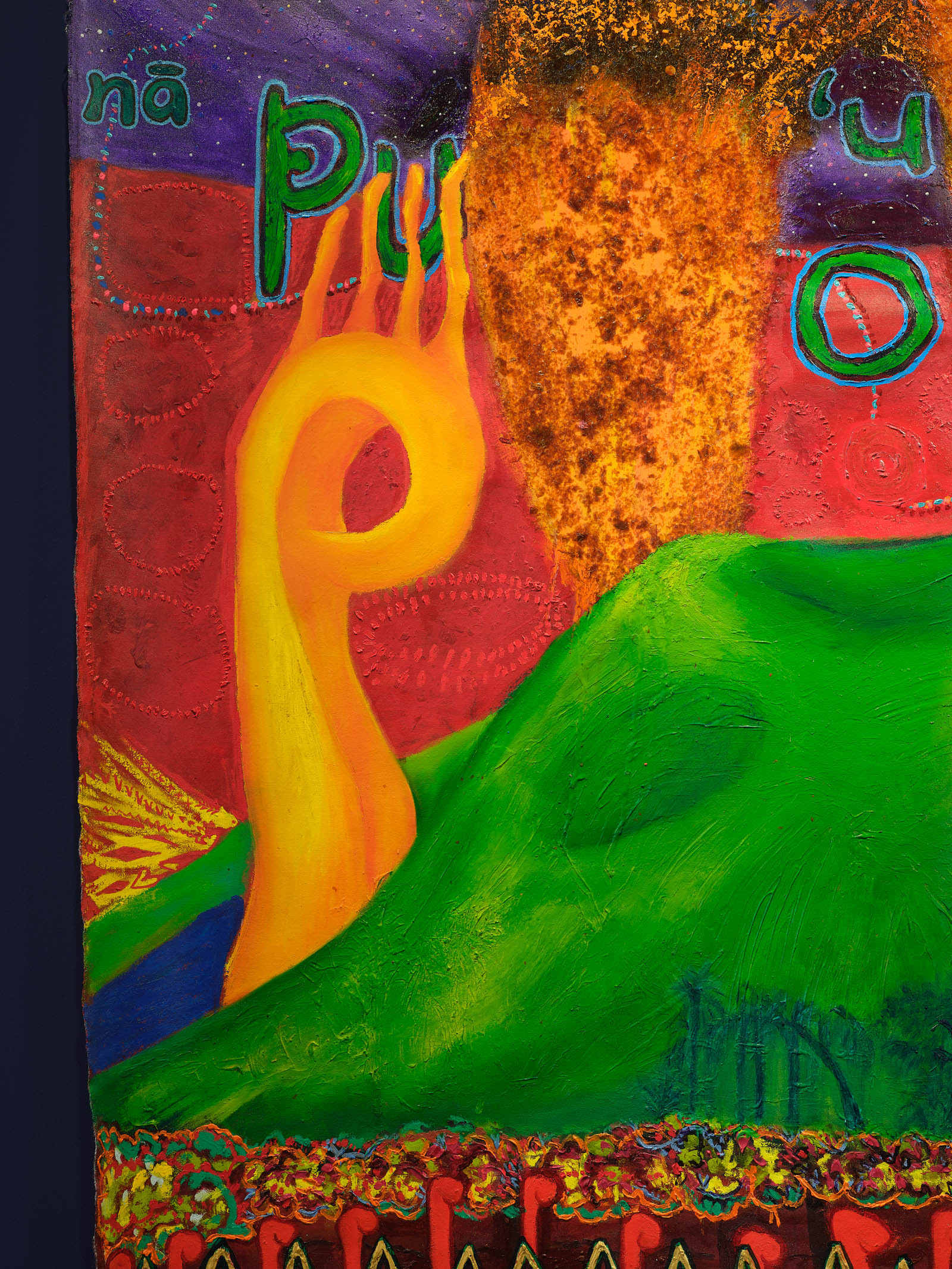
Emily Karaka, Kohala 1, 2024, mixed media on canvas, 1950 x 1960 mm.
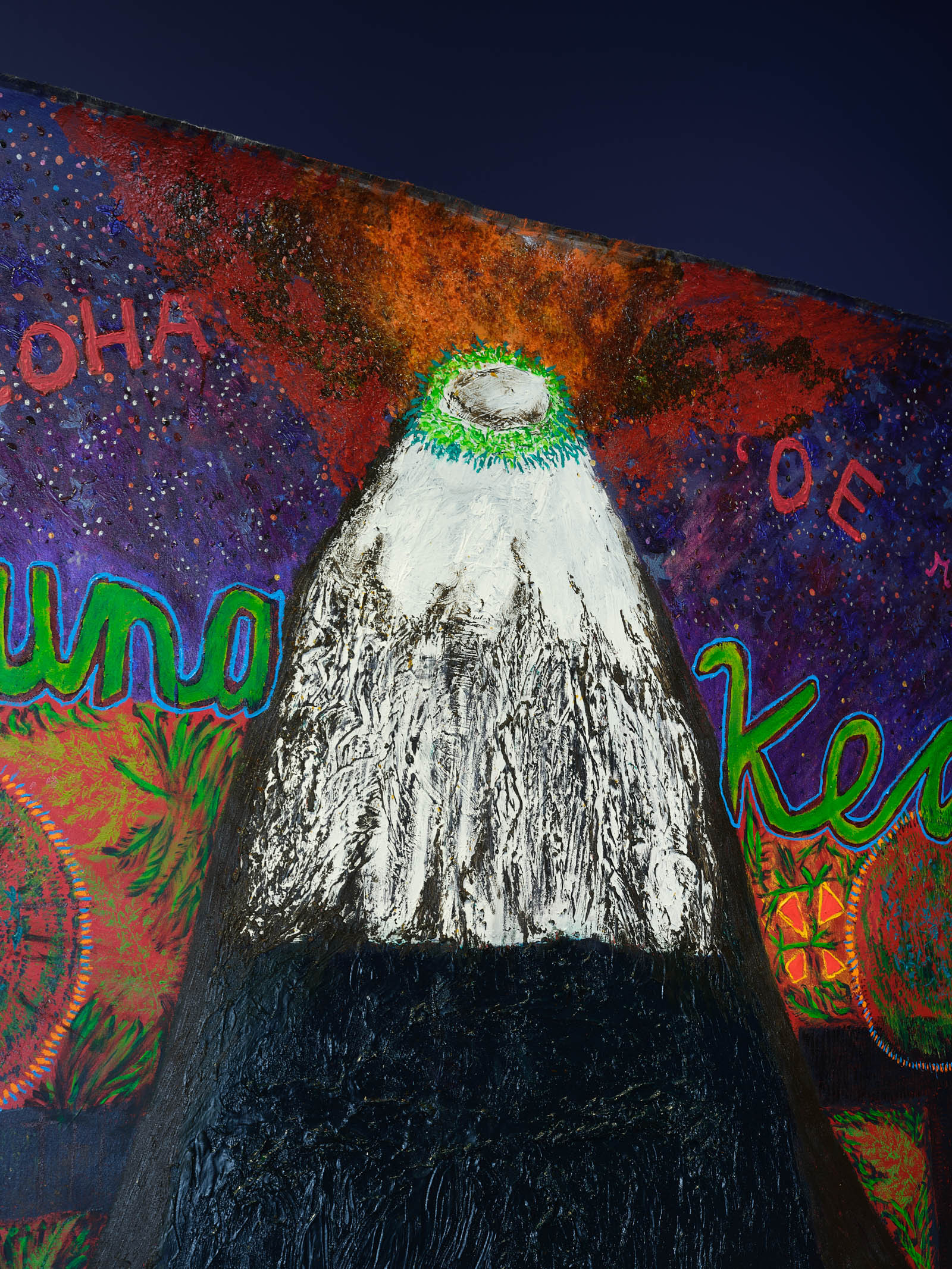
Emily Karaka, Mauna Kea, 2024, mixed media on canvas, 1950 x 1960 mm.
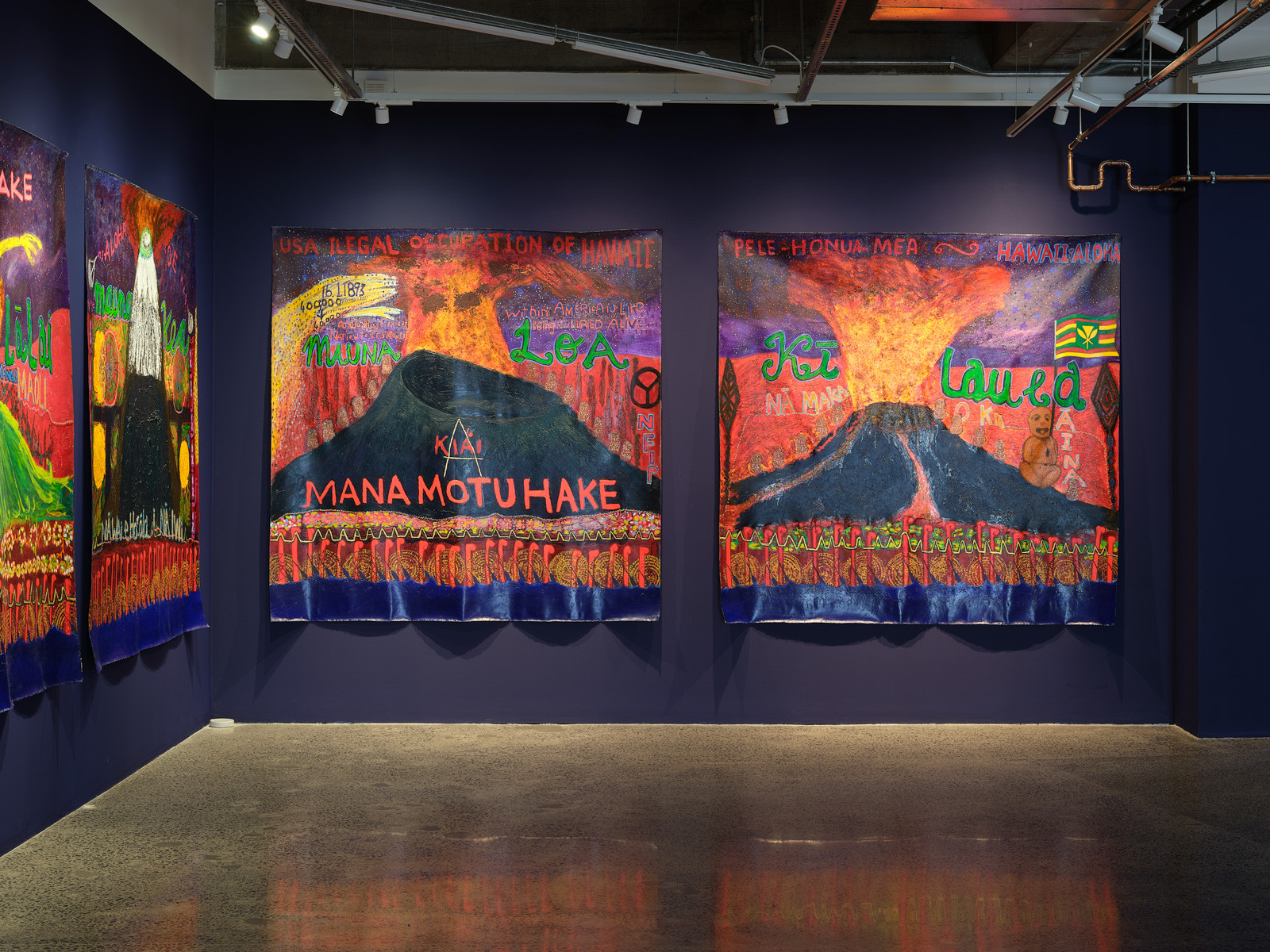
Emily Karaka, Mauna Loa, 2024, mixed media on canvas, 1950 x 1960 mm; Kī lauea, 2024, mixed media on canvas, 2035 x 1960 mm.
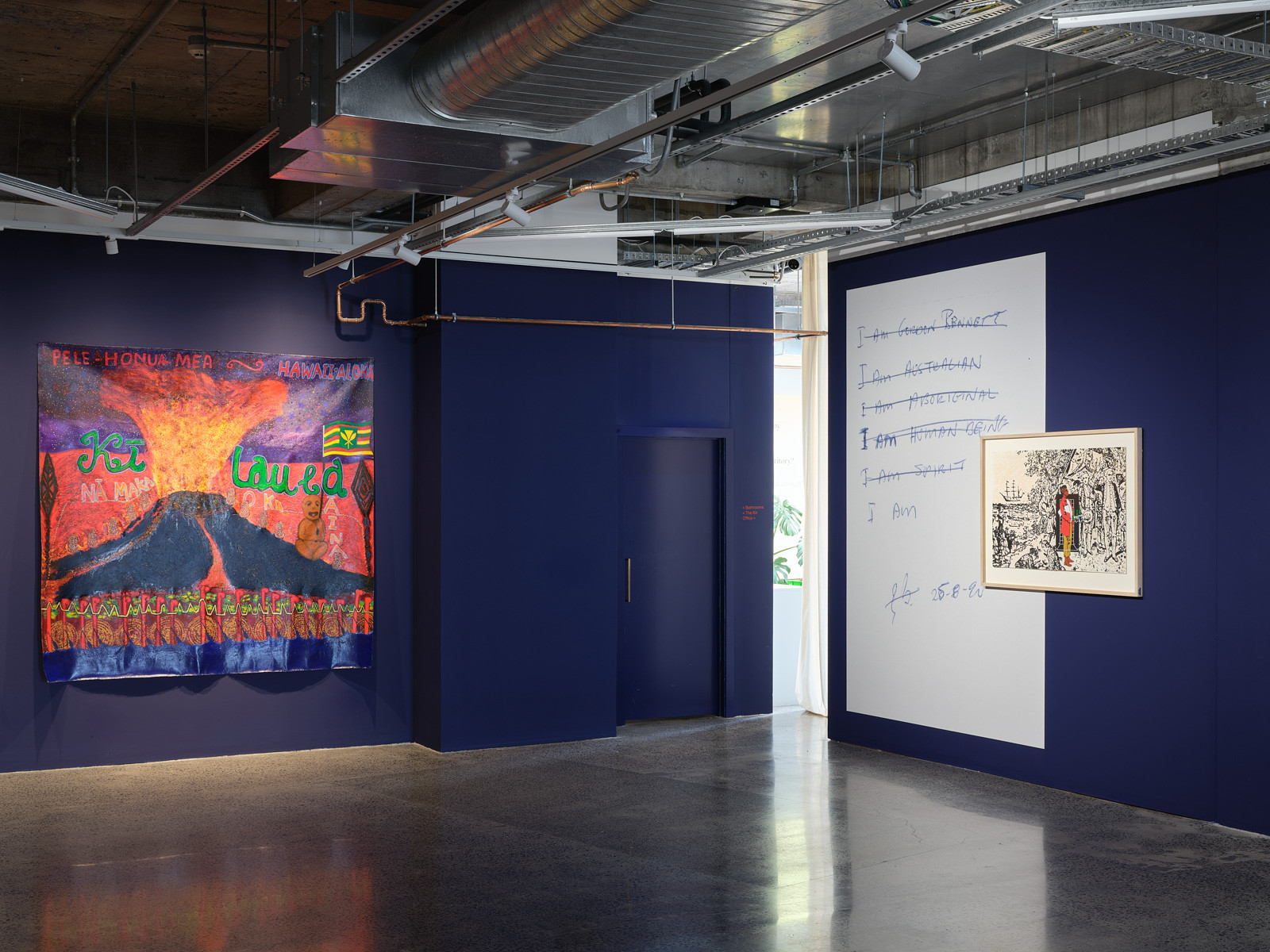
After the undercurrents, 2025. Installation view.
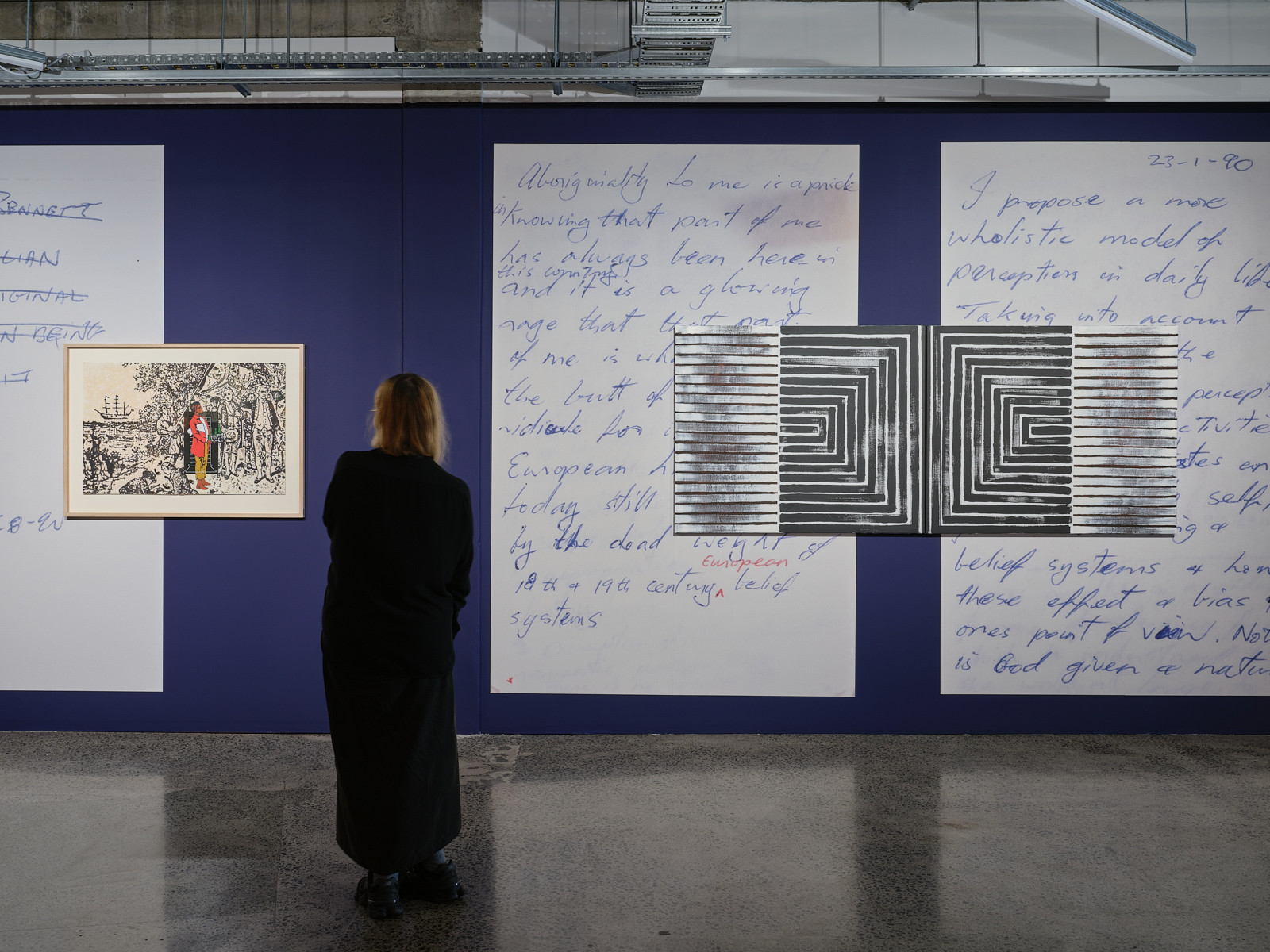
Gordon Bennett, Study for Possession Island, 1991, oil, synthetic polymer paint and gouache on illustration board, 650 x 1000 mm (board), 840 x 1150 mm (frame); Number Five, 2005, synthetic polymer paint on linen, two panels
each 1010 x 1210 mm; I am Gordon Bennett, 1990, archival document enlarged as custom made vinyl stickers, originals, 140 x 100 mm; Aboriginality to me, 1990, archival document enlarged as custom made
vinyl stickers, originals, 150 x 100 mm.
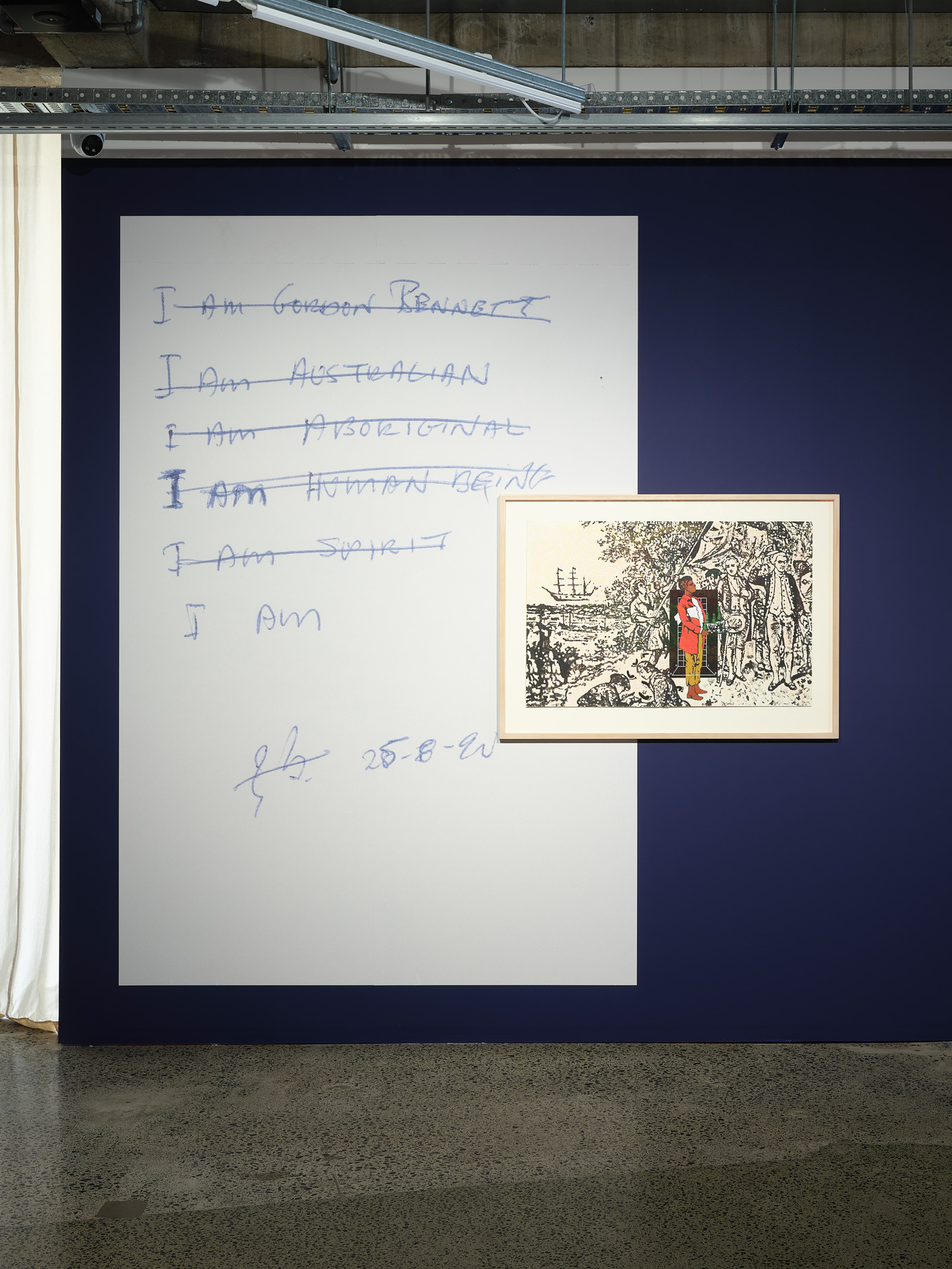
Gordon Bennett, Study for Possession Island, 1991, oil, synthetic polymer paint and gouache on illustration board, 650 x 1000 mm (board), 840 x 1150 mm (frame); I am Gordon Bennett, 1990, archival document enlarged as custom made vinyl stickers, originals, 140 x 100 mm.
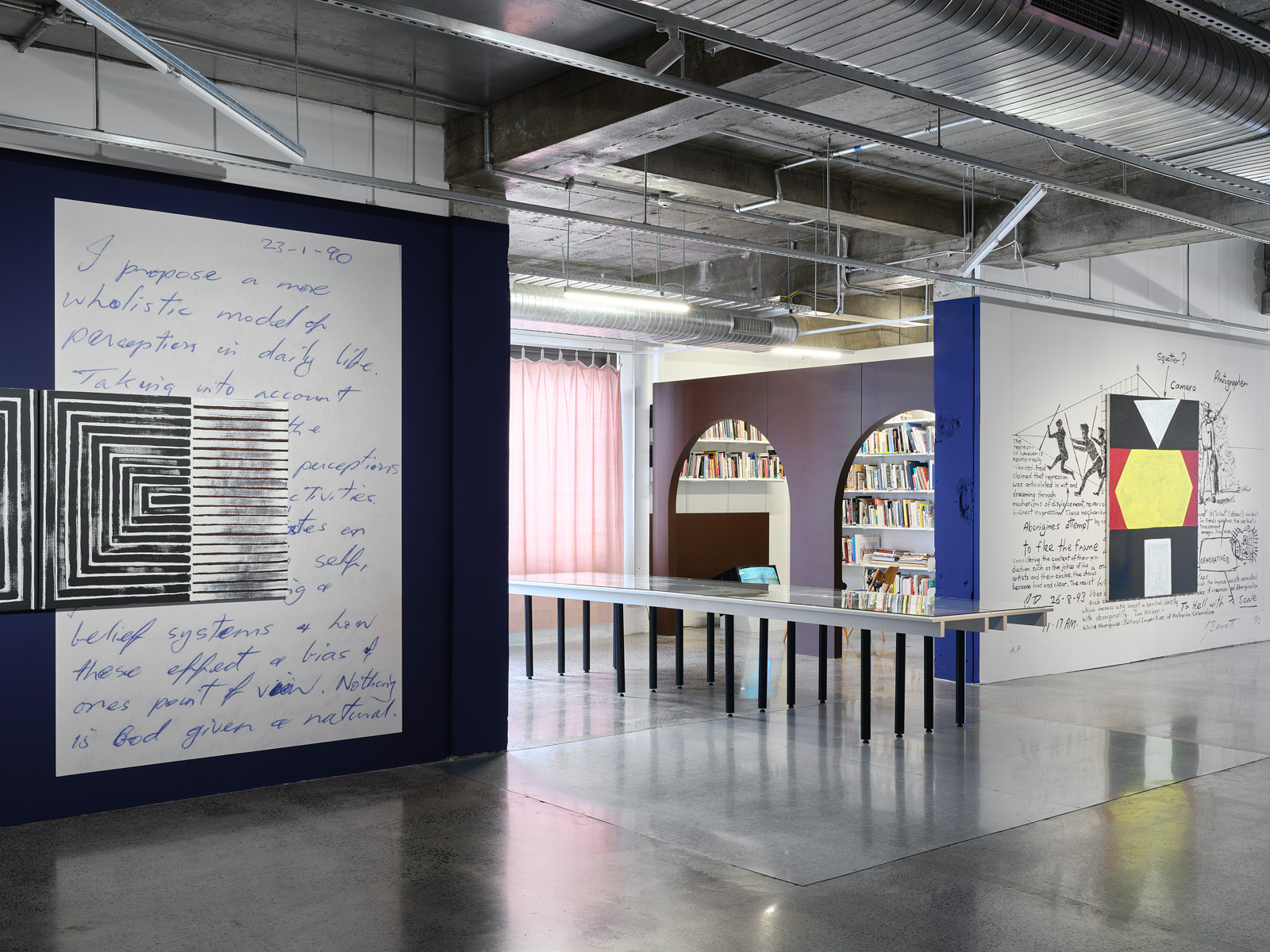
After the undercurrents, 2026. Installation view.
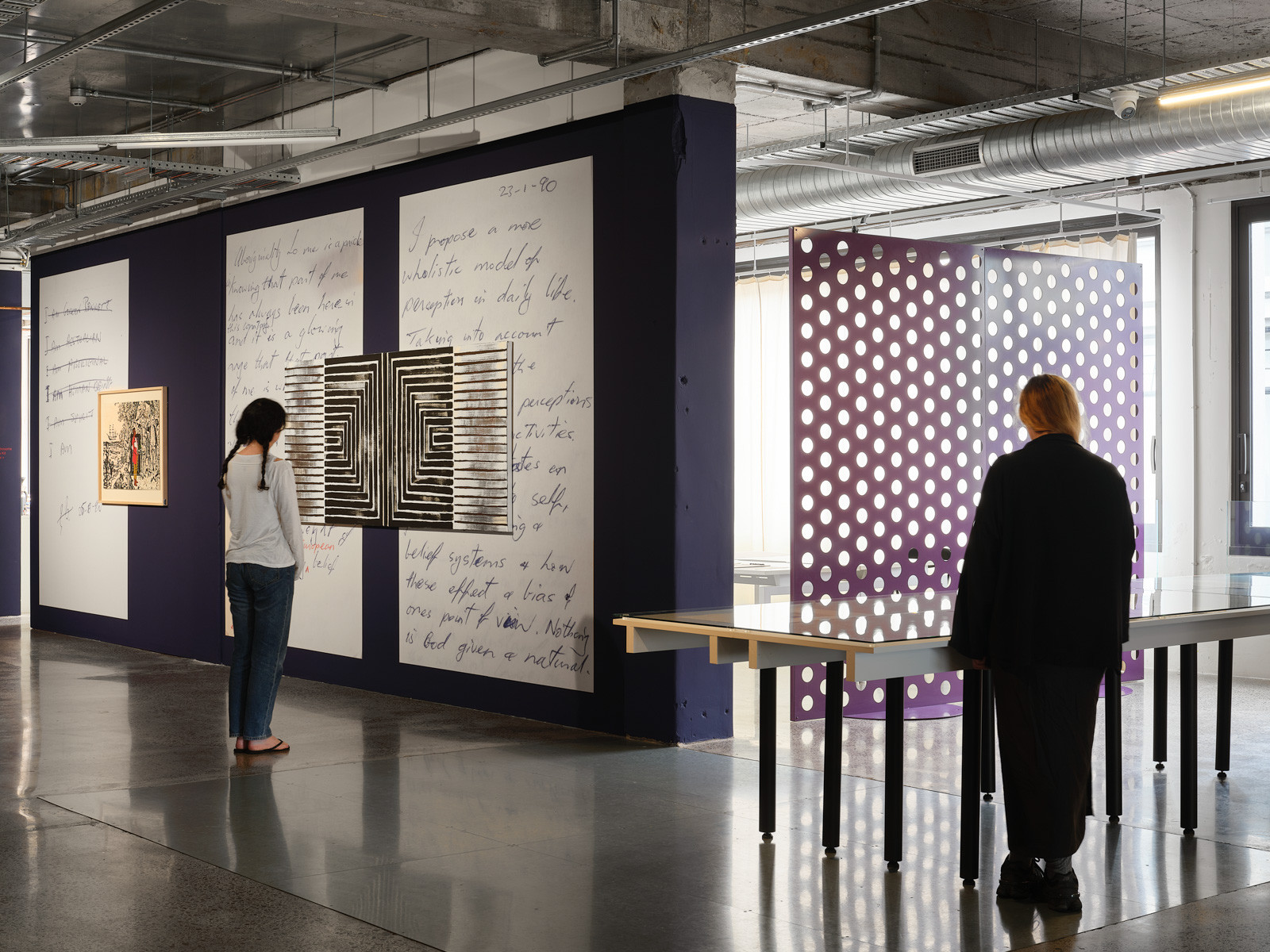
After the undercurrents, 2026. Installation view.
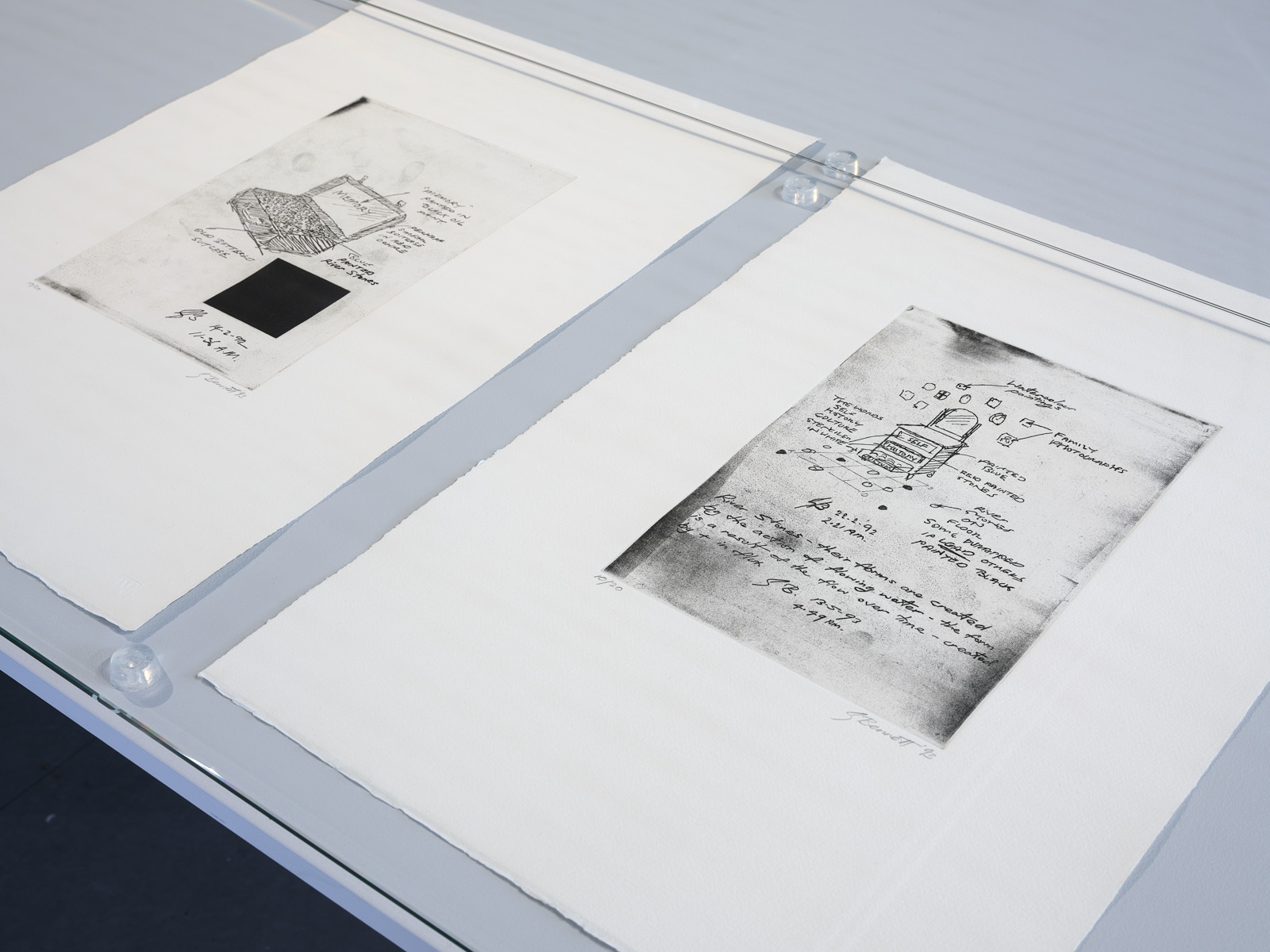
Gordon Bennett, Created by Flux, 1993, soft ground etching with watercolour on paper, 600 x 400 mm;
Memory, 1993, soft ground etching with watercolour on paper, 600 x 400 mm.
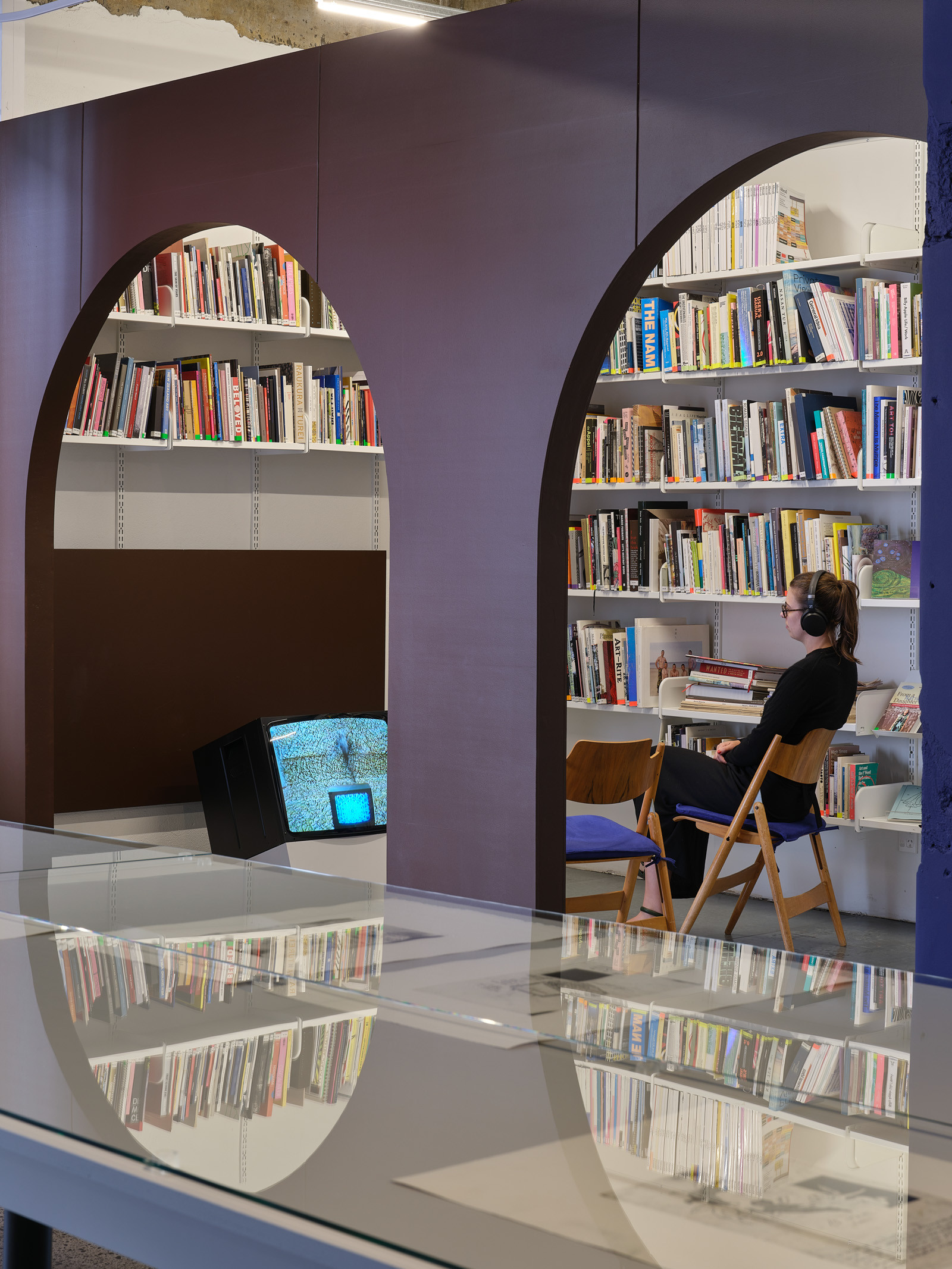
After the undercurrents, 2026. Installation view.
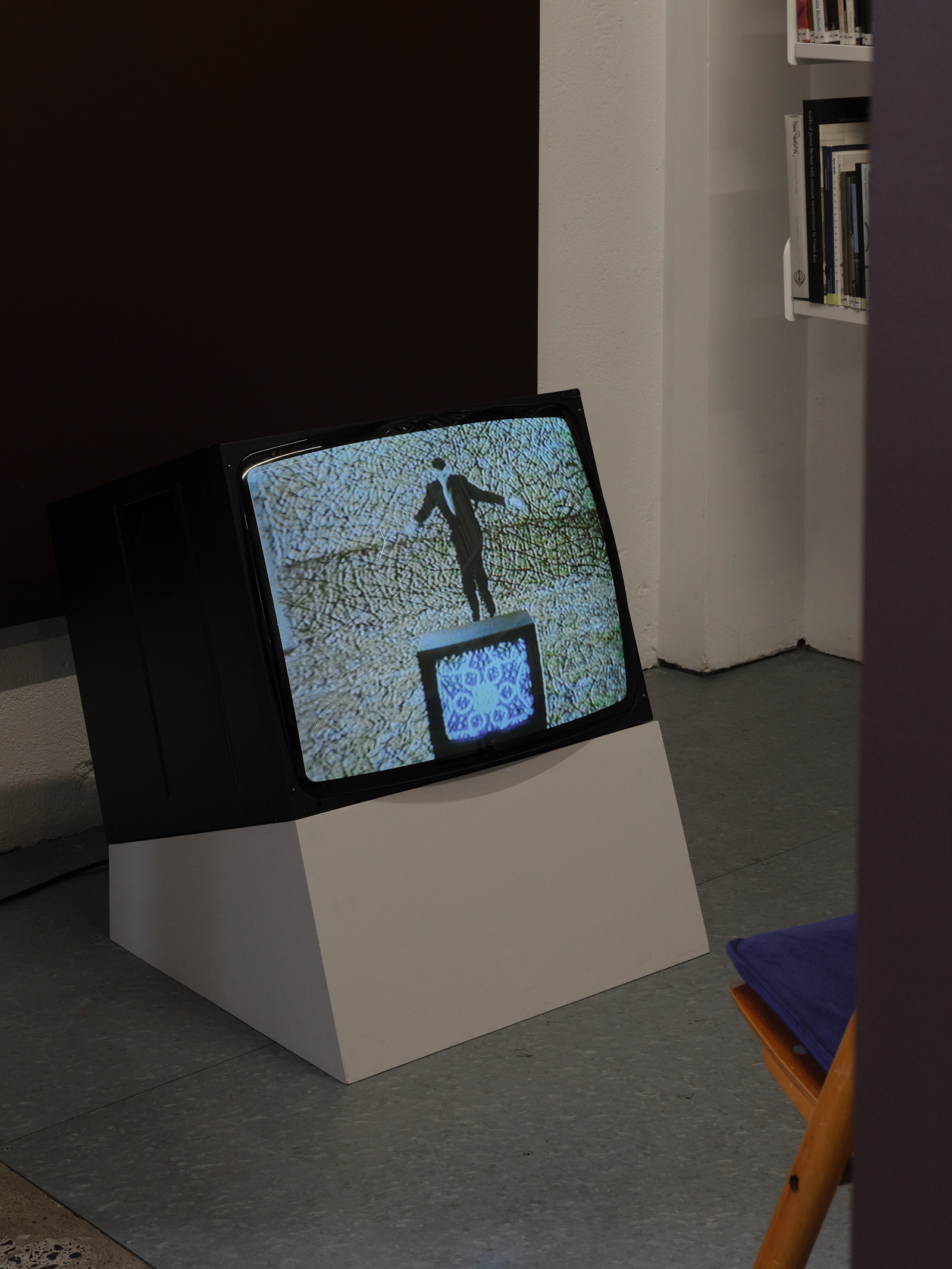
Gordon Bennett, D.U.H! (Down Under Homi), 1994, single channel colour video with sound, 18’13” min, looped.
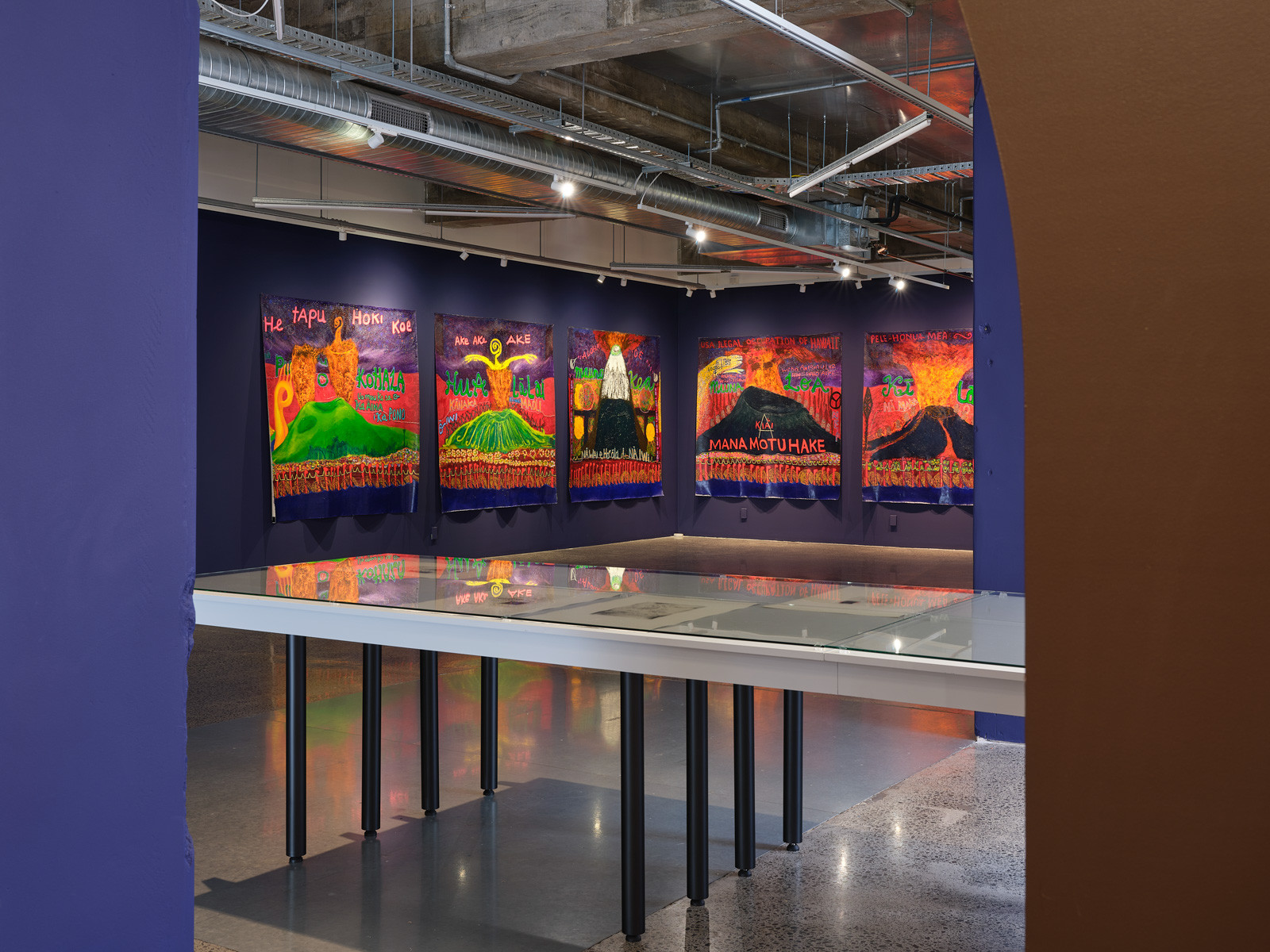
After the undercurrents, 2026. Installation view.
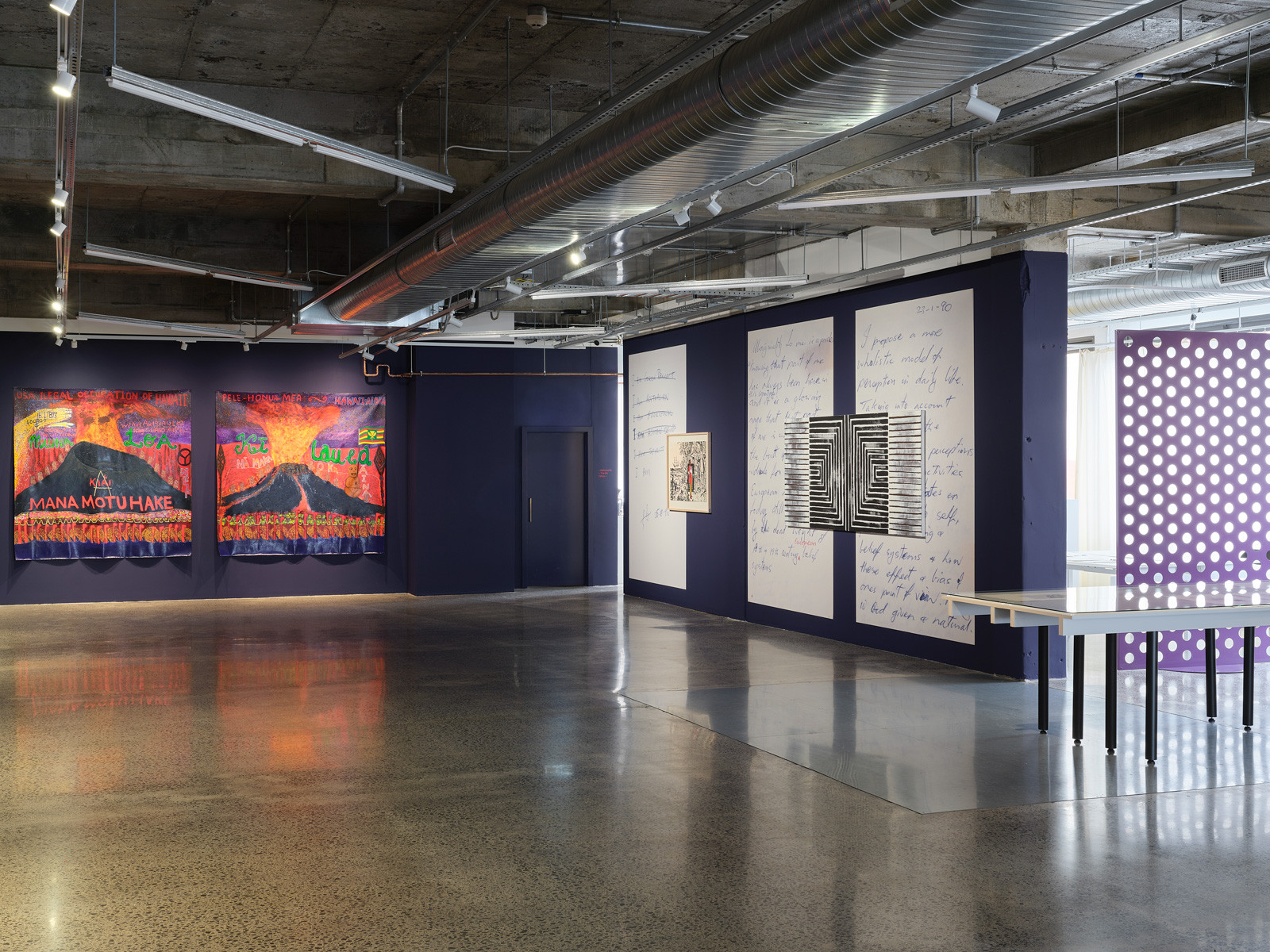
After the undercurrents, 2026. Installation view.
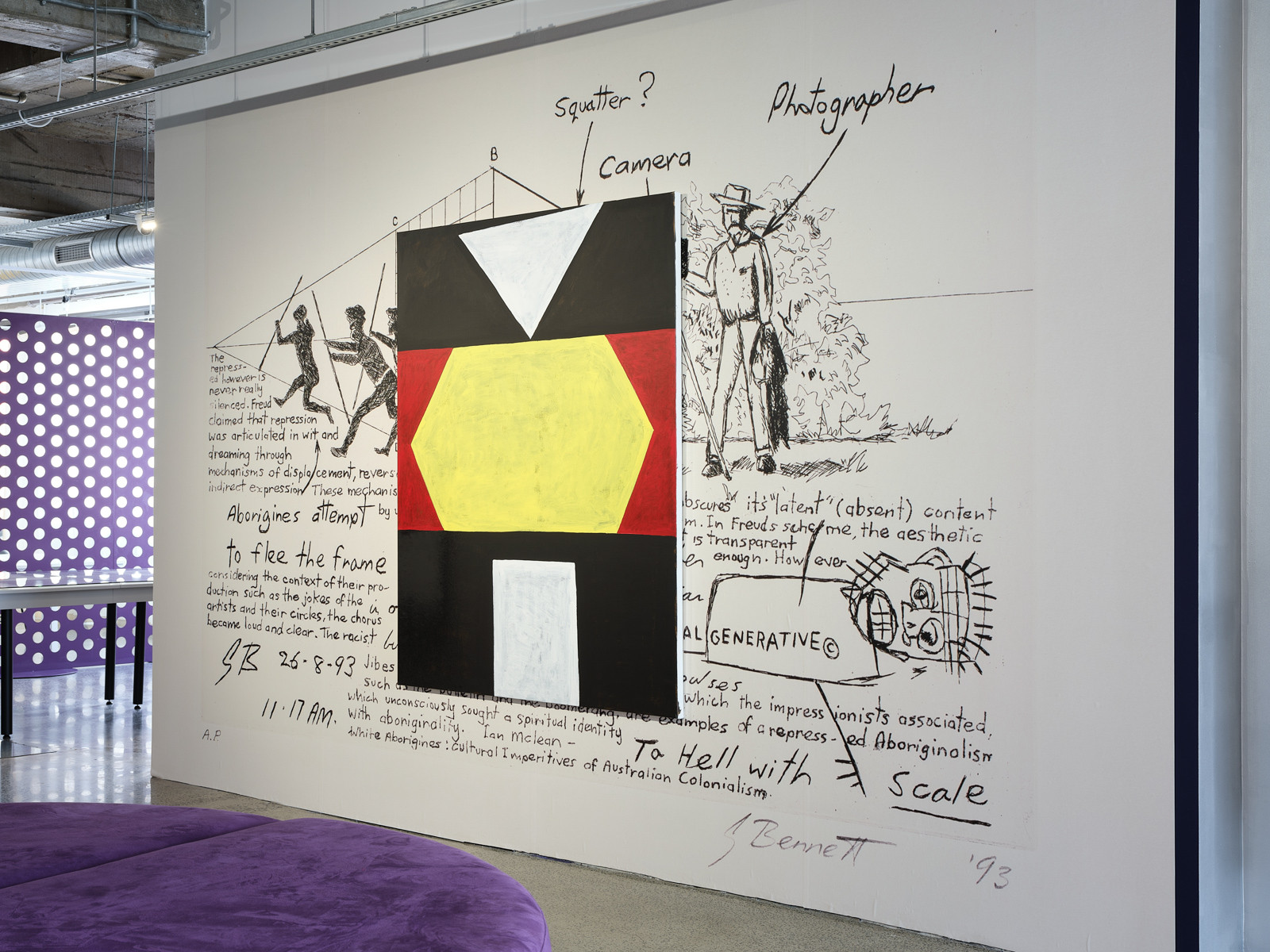
Gordon Bennett, Home Décor (After M. Preston), No 21, 2013, synthetic polymer paint on linen, 1825 x 1520 mm; Aboriginal Generative, 1993, soft ground etching enlarged as a custom made vinyl sticker, original 605 mm x 400mm.
Photography Carl Warner.
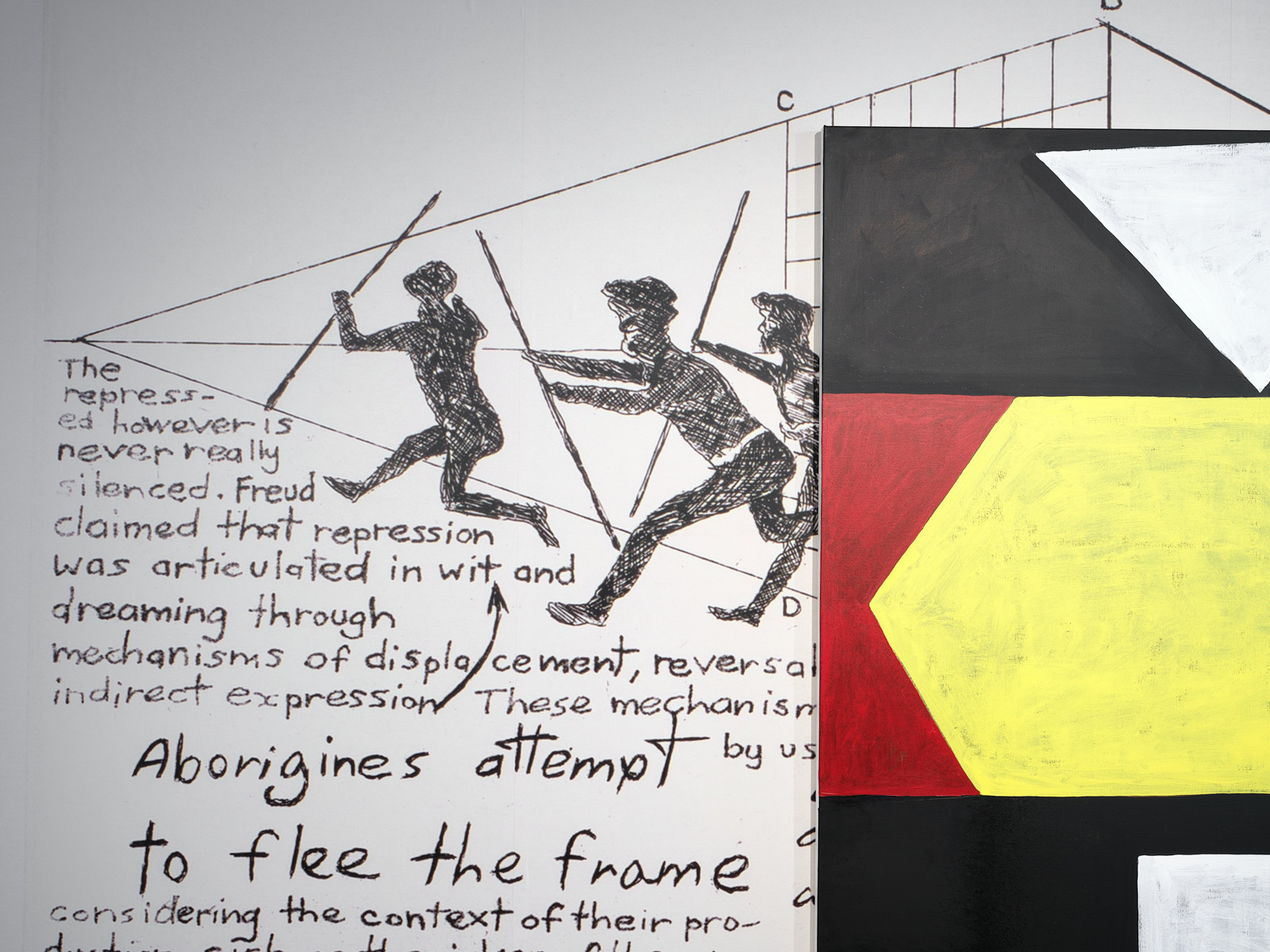
Gordon Bennett, Home Décor (After M. Preston), No 21, 2013, synthetic polymer paint on linen, 1825 x 1520 mm; Aboriginal Generative, 1993, soft ground etching enlarged as a custom made vinyl sticker, original 605 mm x 400mm.
Photography Carl Warner. Detail.
This exhibition brings together the artwork of Gordon Bennett and Emily Karaka, two senior painters from Australia and Aotearoa. Their artworks draw on narratives of place, colonisation, popular culture, and Indigenous world views to explore ideas of struggle and belonging. Both painters express the important role artists play in society by helping audiences see complex issues and encourage change. Through their unique painting styles these artists question our histories and invite us to imagine our futures.
This exhibition is presented in association with Te Ahurei Toi o Tamaki Auckland Arts Festival and with the support of Wesfarmers.
View full exhibition text
Tāmaki Makaurau Auckland is located within a significant volcanic field, encouraging inhabitants and visitors alike to stay attuned to a sense of deep time. Made up of around 50 volcanoes, the field enables a connection that extends all the way to Mataaho, kaitiaki of the Earth’s secrets; to te iwi Māori who have lived and continue to live here; to the complexity of urbanisation, with many of these sacred sites having been mined for the city's infrastructure. Deep below this isthmus is an undercurrent that every once in a while bursts through the mantle, ensuring we remember that indeed, the Earth is alive. As a site full of intensity, Tāmaki Makaurau provides an effective lens to consider history as an essential framework for reckoning with the here and now, prompting the questions: which parts of society gather pressure when issues are not tended to? What necessary conversations burst through, fundamentally changing how we live and relate to each other?
As potent voices of their generation, Gordon Bennett’s and Emily Karaka’s work bursts through the status quo. Both artists address the impacts of colonisation on themselves as individuals and the communities they belong to. Their visually divergent but equally propulsive practices can be characterised as history painting inviting new readings of contemporary society by opening up the nexus of politics, visual culture, and the deeply personal. The divergence in their practices creates a powerful friction in the exhibition, amplifying the implications of a fulsome scrutinisation of history. Friction is also evident in their shared approach to working in a highly embodied way by employing scale, dynamic surfaces, and even the inclusion of their whakapapa or themselves. By leaning into friction these artists shatter narrowing expectations of how a contemporary artist who is Indigenous should work and contribute whether in Aotearoa, Australia, or beyond.
Emily Karaka’s vibrant paintings have a pulse. Unashamedly she is an abstract expressionist, largely self-taught. She powerfully activates, line, colour, and language. Like the isthmus Tāmaki Makaurau, Karaka’s current deviates from standard temporal delineations as she engages with kōrero from her tupuna, from today, and tomorrow. As an artist-activist Karaka describes her work as political landscapes. The artworks in the exhibition insert an Indigenous, full body analysis into the subject within the frame. The Hawai’i suite originally commissioned for Hawai’i Contemporary 2025 displays her dedication to sovereignty and the role that primary sacred sites play within her practice. LAW A? (2026), commissioned for this exhibition, takes the basic requirement for survival—land, air, water—as its starting point. Karaka scrutinises the conglomerate agency LAWA (Land, Air, Water Aotearoa), made up of various council, government, education, science, and private sector groups that measure the health of these resources. While the data may be practically useful, it is notable that a Māori voice is not visible. She subtly draws our attention to the way kaitiakitanga plays out in the current environment where transparency around participation and knowledge sharing is more urgent than ever.
Gordon Bennett came to prominence in the early 1990s in Brisbane after graduating from art school as a mature age student. He played a key role in the Brisbane community where as an artist of Indigenous Australian and Ango-Celtic heritage he actively contributed to reshaping conversations on coloniality and identity. Bennett strode into a post-modern conversation, his practice emerged as incisive, confronting, and was often laced with a humorous undercurrent. The artwork in the exhibition captures the breadth of his practice: painting, printmaking, performance, video, and writing. Study for Possession Island (1991) is indicative of his early work which deploys appropriation to address the skewed way that the settlement of Australia has often been portrayed. As he grappled with the physiological toll of working with the weight of violent subject matter, his work embraced more definitively abstract methods. Throughout his career he tested expectations of the artist’s role in the post-colonial conversation, including withdrawing his engagement with media. The ongoing impact of these expectations within and beyond the artworld is further revealed in the writings and video on display, capturing the mutli-faceted lens through which he worked, spanning the raw, fragile, and overtly punk.
This exhibition tracks undercurrents that span a long arc of time and connects Aotearoa with its neighbour Australia. In the current geo-political climate conversations on how we relate to each other in daily and in administered life are often bluntly wielded with little or no consideration of “which history?” Both Bennett and Karaka create a platform for these tensions to play out through their vivid artistic languages. As they produce vernacular history painting, they draw out the complexities innate in common narratives. In taking bold friction-making positions as artists and participants in society they produce a release valve. By releasing tension in this way, their reflections on the world around them bursts forth rather than building up deep below the surface. They offer audiences a pathway to a maturing conversation on our histories and an expansive view of time in order to imagine our futures, together.
Biographies
-
Gordon Bennett (1955–2014) lived and worked in Brisbane and is acclaimed as one of Australia’s most significant and critically engaged contemporary artists. He is recognised for his perspectives on the post-colonial experience, particularly in the Australian context, with much of his work mapping alternative histories and questioning racial categorisations and stereotypes. Bennett regularly adopted the persona ‘John Citizen’ as a means of confronting the rhetoric of identity and the politics of categorisation in Australian art. Solo exhibitions include Unfinished Business – The Art of Gordon Bennett (2020–2021), QAGOMA, Brisbane; Gordon Bennett: Be Polite (2016), Institute of Modern Art, Brisbane; Outsider / Insider: The Art of Gordon Bennett (2012), AAMU, Utrecht; Gordon Bennett: a survey, (2007), National Gallery of Victoria, Melbourne. Select group exhibitions include 65,000 Years: A Short History of Australian Art, Potter Museum of Art (2025), University of Melbourne; Espressioni Con Frazioni, Castello di Rivoli Museo d’Arte Contemporanea (2022), Italy; A Year in Art: Australia 1992 (2021–2022), Tate Modern, London; 8th Berlin Biennale for Contemporary Art (2014), Berlin; Documenta 13 (2012), Kassel, Germany; Cubism and Australian Art (2009), Heide Museum of Modern Art, Melbourne; 16th Biennale of Sydney: Revolutions – forms that turn (2008), Sydney; Three Colours: Gordon Bennett and Peter Robinson *(2004), Heide Museum of Modern Art, Melbourne.
-
Emily Karaka was born in 1952 in Tāmaki Makaurau, where she continues to live and work. She is of Ngāpuhi (Ngāti Hine and Ngāti Kahu o Torongare) and Waikato-Tainui (Ngāi Tai ki Tāmaki, Te Kawerau ā Maki, Ngāti Tamaoho, Te Ākitai Waiohua, Ngāti Rori-Te Ahiwaru, Ngāti Mahuta, and Ngāti Tahinga) affiliations, and has been exhibiting since 1977. Her paintings draw on diverse art making traditions, including toi whakairo (carving) and abstract expressionism. Characterised by dazzling colour and emotional intensity, they frequently incorporate text and tie into the artist’s long standing work advocating kaitiakitanga (stewardship) and mana motuhake (self-determination). Karaka has produced major paintings for the 22nd Biennale of Sydney, NIRIN (2020), the landmark Toi Tū Toi Ora: Contemporary Māori Art (2020–2021) at Toi o Tāmaki, and Aloha Nō Hawaiʻi Triennial 2025. Recent solo exhibitions include Matariki Ring of Fire (2022) at Te Uru Waitākere Contemporary Gallery, which grew out of Karaka’s 2021 McCahon House residency, and Ka Awatea, A New Dawn (2024), curated by Hoor Al Qasimi and Megan Tamati-Quennell, at Sharjah Art Foundation, United Arab Emirates. Her works are held by important institutions in Aotearoa New Zealand and abroad, including Auckland Art Gallery Toi o Tāmaki, Christchurch Art Gallery Te Puna o Waiwhetū, the Museum of New Zealand Te Papa Tongarewa, and Sharjah Art Foundation.
Events
Exhibition tour with Kaitohu Director Ruth Buchanan
Pūtātara: Revolutions in Māori Art, RNZ Podcast Launch
In Focus: A Curatorial Intensive with Maria Lind
Question time: A lecture by Maria Lind
Emily Karaka in conversation with Chelsea Winstanley
Teu fakalongolongo, A performance by Kalisolaite 'Uhila
2026 programme
Each year Artspace Aotearoa asks one question. Across the year, this question is explored by artworks, artists, and audiences. In 2026, we ask, “which history?” You can think of our annual exhibition programme as a connected inquiry, in four parts and with many possible answers. Join us.
Gordon Bennett
Emily Karaka
Selina Ershadi
Atarangi Anderson & Thies Vaihū
Margaret Aull
Elvis Booth-Claveria
Chris Bryant-Toi
Fiona Connor
Millie Dunstall
Jef Geys
Pākāriki Harrison
Abigail Aroha Jensen & Emil Scheffmann
Keciano
Georgia Larkins-Tareha
Lana Lopesi
Alex Martinis Roe
Andreas Müller
Liam Philp
Samoa House Library
Te Wānanga o Aotearoa
Sam Thorne
Nathan Wilson
et al.
Lolani Dalosa
Ken Faber
Lily Greig
Ton Ray
Rangi White